The short version
- A bowling positioner holds your wrist at a fixed angle for a consistent release, while a soft brace or compression band is mainly for comfort and warmth.
- A ball that's too heavy or badly drilled is one of the most common reasons for wrist pain in bowling, so check it before buying any support.
- Thumb-side wrist pain is very common in bowlers, and in one study of elite bowlers more than half had signs of De Quervain's tenosynovitis.
- A relaxed pendulum swing and a quiet, firm wrist put much less strain on the joint than muscling the ball.
- SneakyDeez wraps are soft compression bands for training and won't position your wrist like a bowling positioner.
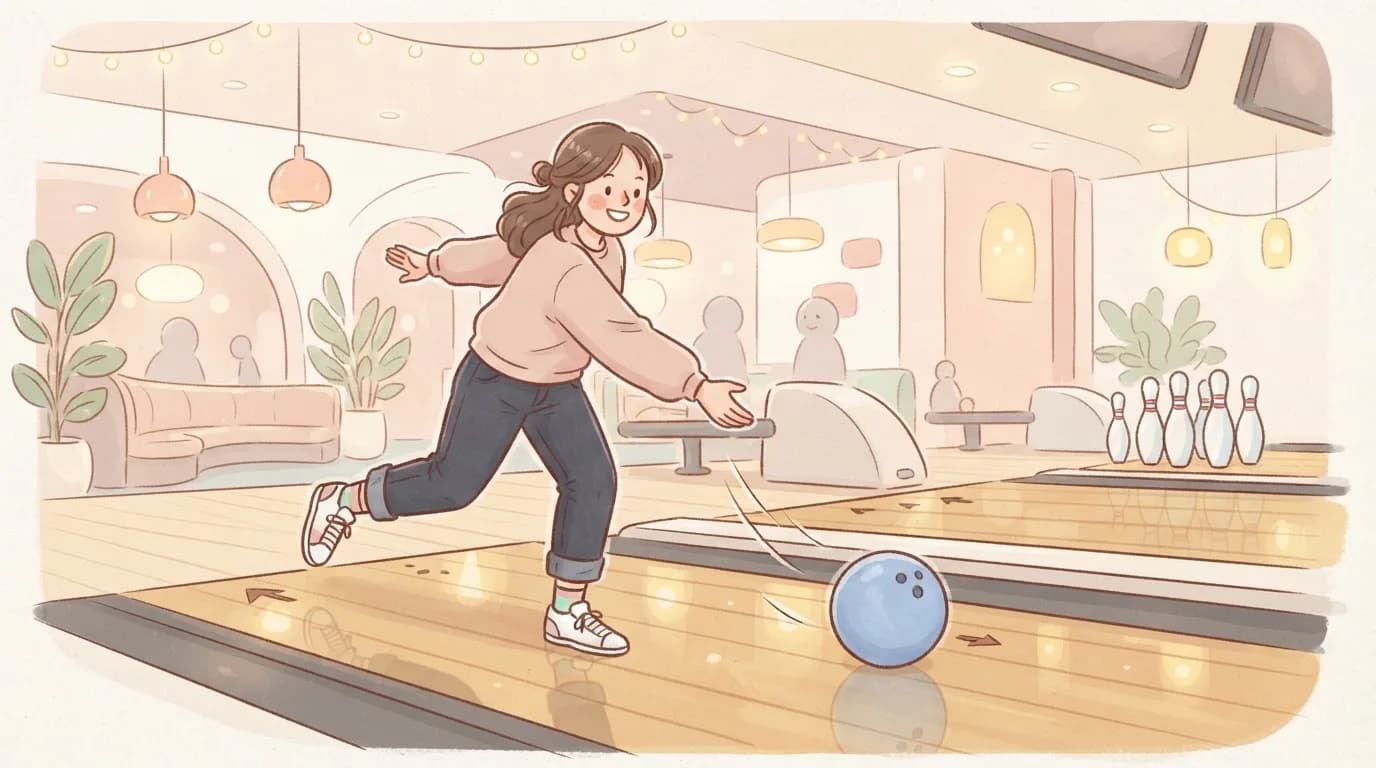
The best wrist support for bowling depends on why you want one. A bowling wrist positioner has a firm back plate that holds your wrist at a set angle, so your release is the same every time and your forearm muscles don't have to fight the ball. A soft brace or compression band is more about comfort and a feeling of support if your wrist aches after a few games. Neither will fix a ball that's too heavy or badly fitted, so it's worth checking that first.
Why does bowling hurt your wrist?
A bowling ball weighs up to 16 pounds (just over 7 kg), and you carry it at the end of a long swinging arm with your fingers in its holes. Your wrist has to stay firm through the backswing, hold its shape as the ball comes forward and then release with a bit of rotation if you throw a hook. Do that across three games, a couple of times a week, and the tendons on the thumb side and the back of the wrist get a lot of repetitive work.
The research backs up what bowlers already feel. In a study of 39 elite tenpin bowlers in Malaysia, pain was most common in the wrist, the ring and middle fingers and the thumb, and more than half showed signs of De Quervain's tenosynovitis, an irritation of the tendons on the thumb side of the wrist. There's also a condition called bowler's thumb, where repeated pressure from the thumb hole irritates a small nerve on the inside of the thumb and causes numbness or tingling.
The usual reasons wrists get sore in bowling are:
- a ball that's too heavy for you, so the wrist bends back at the bottom of the swing
- a house ball with holes that don't fit, which makes you squeeze to hold on
- muscling the ball with your arm and wrist instead of letting it swing like a pendulum
- trying to add hook by twisting the wrist hard at release
- a sudden jump in how often you bowl, like starting a new league or a tournament weekend
Bowling wrist positioner, brace or soft support: which one?
People use "wrist support" for a lot of different products, and they do quite different jobs. This table should help you match the support to what you actually need.
| Type | What it does | Good for | Trade-off |
|---|---|---|---|
| Bowling positioner (rigid back plate, sometimes adjustable) | Holds the wrist at a fixed angle through the swing and release | Bowlers who want a consistent release or whose wrist collapses under the ball's weight | Takes some getting used to, and it changes your release, so it's worth trying with a coach |
| Bowling wrist brace or glove with light stays | Limits how far the wrist can bend back | League bowlers whose wrists tire towards the third game | Less adjustable than a positioner |
| Medical or pharmacy wrist splint | Rests a sore wrist in a neutral position | Use off the lanes while an injury settles, if a pharmacist, doctor or physio suggests it | Not designed for bowling, and too stiff to bowl in |
| Soft elastic compression band | Gives warmth, gentle compression and a feeling of support while leaving movement free | Comfort on achy days, warm-ups and gym work | Doesn't fix your wrist angle or protect against the ball's weight |
If you'd like to know more about the different families of supports, I've written about types of wrist support band and what a wrist support brace actually does.
Where SneakyDeez fits for bowlers
I'll be straight with you, because I'd rather you bought the right thing. SneakyDeez wraps are soft elastic compression wristbands I designed for pole dancing and training. They don't have a plate or stays, so they won't hold your wrist at a set angle the way a bowling positioner does. If consistency at release is what you're after, a proper bowling positioner from a pro shop is the better choice.
Where a soft wrap can be nice is around your bowling rather than in it. Plenty of bowlers also lift, do push-ups or go to classes, and a firm compression band gives you warmth and a feeling of support on those days without locking the wrist. Some people also like the snug, warm feeling while they warm up. If you try one while bowling, check that it isn't changing your grip or release, and take it off if it does.
Is your bowling ball too heavy for your wrist?
A common starting point is a ball that weighs roughly 10 percent of your body weight, up to the 16 pound maximum, but that's only a guide. Your wrist will tell you more than any chart. Try this simple check:
- Hold the ball with your fingers in the holes and let your arm hang straight down.
- Swing it gently back and forward a few times, like a pendulum.
- Notice your wrist. If it bends back at the bottom of the swing, or your forearm starts burning after a few swings, the ball is probably too heavy for you right now.
Dropping a pound or two often makes an immediate difference to wrist comfort, and a lighter ball you control well usually scores better than a heavy one that pulls you around. Fit matters just as much. A ball drilled for your hand by a pro shop means you don't have to squeeze to hold on, which takes pressure off the wrist, the fingers and the thumb.
Masha's tip: Before your first frame, warm up your wrists like you would before any sport. Ten slow circles each way, ten gentle bends forwards and back, and a few easy practice swings with no ball. Cold wrists don't like heavy loads.
Technique habits that protect your wrist
- Let the ball swing. Think of your arm as a pendulum hanging from your shoulder. The less you push, pull or muscle it, the less your wrist has to work.
- Keep the wrist firm and quiet. A slightly cupped or straight wrist that holds its position is kinder than one that flops back and then snaps forward at release.
- Rotate with your hand and forearm together. If you throw a hook, a coach can help you create rotation without wrenching the wrist at the last moment.
- Relax your thumb. A death grip on the thumb hole is a common source of thumb and wrist pain, and better-fitting holes help a lot.
- Pace yourself. If you're bowling a lot of games, shake out your hand between frames and stretch your forearms between games.
Simple strength work for bowlers
Stronger forearms keep your wrist steady under the ball for longer. Try this two or three times a week, with a light dumbbell or a water bottle to start. It should feel like work in the forearm and never cause sharp pain.
- Wrist curls, palm up: forearm on your thigh, curl the weight up slowly and lower for 3 seconds. 2 to 3 sets of 12 to 15.
- Reverse wrist curls, palm down: same again with a lighter weight. 2 to 3 sets of 12 to 15.
- Forearm rotations: hold a hammer or dumbbell at one end and slowly turn your palm up and down. 2 sets of 10 each way.
- Thumb-side tilts: hold the same hammer upright and tip it forwards using only the wrist. 2 sets of 10.
- Grip squeezes and finger spreads: squeeze a soft ball for 5 seconds, then spread your fingers wide against a rubber band. 2 sets of 10 each.
For more ideas, see my guide to stronger wrists.
When to rest and when to see a doctor
A tired, achy wrist after a long night of bowling that's fine by morning is usually just your body asking for a bit more strength and a lighter week. These are signs to rest and get advice:
- pain on the thumb side of the wrist that's there every time you bowl, or when you lift a kettle or pour a drink
- numbness or tingling in your thumb or fingers
- swelling, or pain that wakes you up at night
- a sudden sharp pain or pop during a delivery
- pain that hasn't eased after two weeks, which is when the NHS suggests seeing a GP
Thumb-side pain that keeps coming back can be De Quervain's, and my article on De Quervain's and thumb-side wrist pain explains it in more detail. The AAOS guide to wrist sprains is good reading if you twisted it during a delivery. And if bowling is one of several sports you play, take a look at my pieces on wrist pain from boxing and wrist pain from cycling.
More in Sports
- Wrist Pain and Numb Hands from Cycling: Bike Fit, Grips and Gloves
- Wrist Pain from Boxing: Why It Happens and How to Get Relief
- Tennis Wrist Support: 5 Exercises for Stronger Wrists in Tennis and Padel
- Best Wrist Support for Carpal Tunnel If You Train or Play Sport
Questions people ask
Should I wear a wrist brace for bowling?
It depends on the reason. If your wrist collapses under the ball or you want a more consistent release, a bowling positioner can help, ideally with a coach's input. If your wrist simply aches, check your ball weight and fit first, and see a doctor or physio if the pain keeps coming back.
What does a bowling wrist positioner do?
It has a firm plate along the back of the hand and wrist that holds the wrist at a set angle through the swing and release. That makes your release more repeatable and takes some load off the forearm muscles. Many are adjustable, so you can change the angle as your game develops.
Why does my thumb-side wrist hurt after bowling?
The tendons on the thumb side of the wrist work hard to hold and release the ball, and irritation there, often called De Quervain's tenosynovitis, is common in bowlers. A badly fitting thumb hole and a tight grip make it worse. If it keeps happening, get it assessed.
How do I know if my bowling ball is too heavy?
Let the ball hang and swing gently like a pendulum. If your wrist bends back at the bottom of the swing, or your forearm tires quickly, it's probably too heavy for you right now. Around 10 percent of your body weight is a common starting point, up to 16 pounds.
Can I bowl with a wrist sprain?
It's best to rest a sprained wrist from bowling until it's comfortable to grip and twist, because the ball's weight pulls on exactly the structures that are healing. If you're not improving after two weeks, or you heard a pop, see a doctor.
Shop the fix
Wraps made for exactly this
Handmade in Slovenia by a pole teacher, with firm compression that sits low on the wrist.
Sources we checked
Written by
Masha Pinner
Pole dance teacher at Pandora Art of Pole in Slovenia and former fashion designer. Masha started SneakyDeez in 2017 after years of teaching on sore wrists, and she still designs every pair.
Read Masha’s story