The short version
- De Quervain's tenosynovitis is irritation of two thumb tendons as they pass through a narrow tunnel on the thumb side of the wrist.
- Pain is typically over the base of the thumb and gets worse with gripping, pinching, twisting and lifting.
- It's especially common in pregnancy and new parents, in women, in people over 40 and in people who grip or use their thumbs a lot.
- The Finkelstein test is a useful clue for clinicians, but it can be uncomfortable for healthy wrists too, so it isn't a home diagnosis.
- Rest, changing how you lift and grip, and a thumb splint help most people, with steroid injections or a small operation if needed.
De Quervain's tenosynovitis is irritation of two tendons that run from your forearm to your thumb, at the point where they pass through a narrow tunnel on the thumb side of the wrist. It causes pain and tenderness on the thumb side that gets worse when you grip, pinch, twist or lift, and it's especially common in new parents and in people who use their thumbs a lot. Most cases settle with rest, a thumb splint and changes to how you use your hand, and a steroid injection or a small operation are options if it doesn't.
If lifting a kettle, picking up a baby or scrolling on your phone has started to make the base of your thumb ache, you're in good company, because this is one of the most common causes of thumb-side wrist pain. In this guide I'll explain what's going on, the test doctors use to check for it, why it loves new parents, and what tends to help. It's here to help you understand your wrist, and a GP or physio is the person who can confirm what's going on.
What is De Quervain's tenosynovitis?
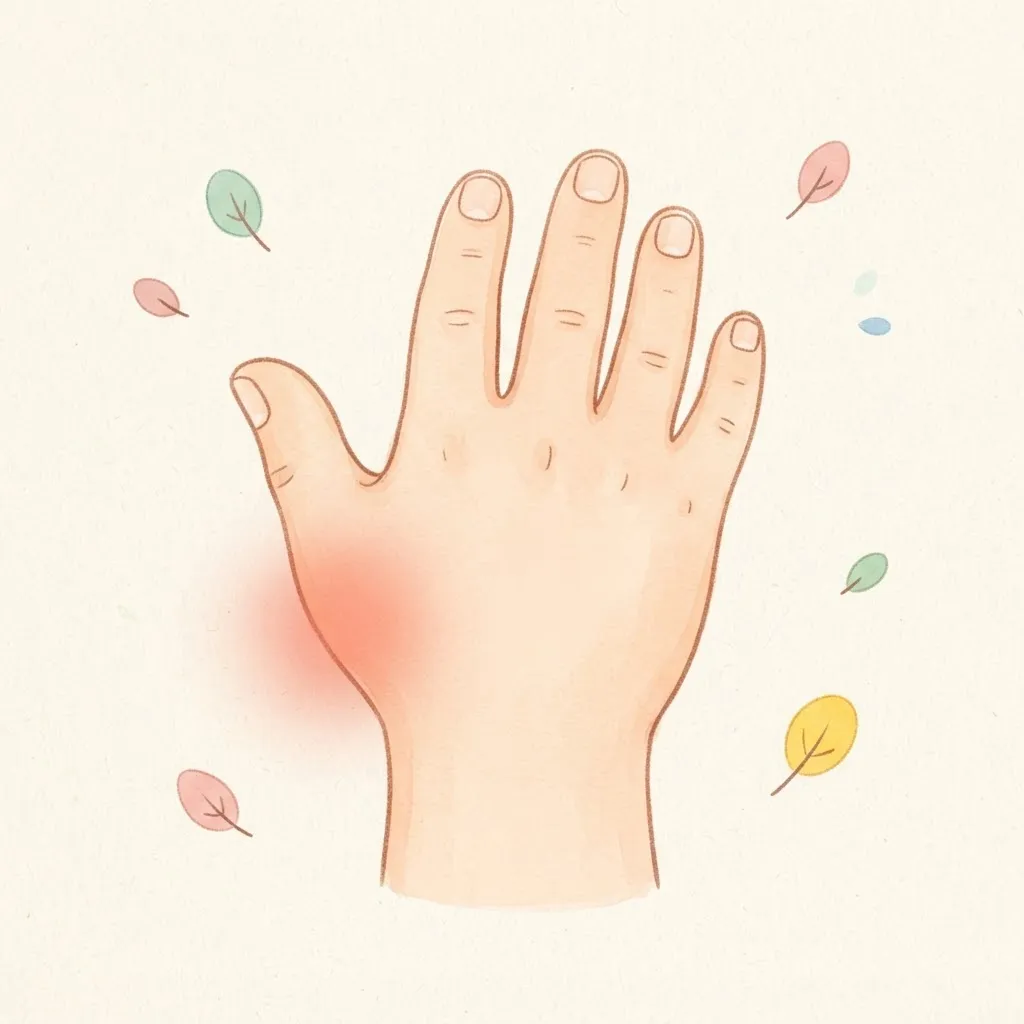
Two tendons that move your thumb out and back, called abductor pollicis longus and extensor pollicis brevis, travel together through a small tunnel over the bony knob on the thumb side of your wrist. According to OrthoInfo, De Quervain's happens when those tendons become irritated inside that tight tunnel. The lining around them thickens, the space gets even tighter, and every thumb and wrist movement rubs where it shouldn't. You'll also hear it called De Quervain's syndrome, De Quervain's disease, or nicknames like "mummy thumb" and "texting thumb".
What are the symptoms?
The Cleveland Clinic and NHS hand therapy services describe a fairly consistent picture:
- pain on the thumb side of the wrist, right over the bony knob at the base of the thumb
- pain that gets worse with gripping, pinching, twisting and lifting, such as opening jars, wringing out a cloth or picking up a child
- pain that can spread up the forearm or down into the thumb
- tenderness and sometimes visible swelling over that spot
- a catching, creaking or snapping feeling when you move your thumb
It usually comes on gradually rather than after a single injury. If your thumb-side pain started with a fall onto your hand, please read the warning section below, because that needs a different kind of check.
Who gets De Quervain's, and why?
Often there's no single clear cause, and an NHS hand therapy leaflet points out that many people develop it without any obvious trigger. That said, some groups get it much more often.
New parents
De Quervain's is well known in pregnancy and in the months after having a baby. Hormonal changes and fluid retention probably play a part, and so does all the lifting. When you scoop a baby up under the armpits, your thumbs stick out in an "L" shape with the wrists tipped, which is precisely the position that strains these tendons, and you do it dozens of times a day. Partners and grandparents who do a lot of lifting can get it too.

People who use their thumbs and grip a lot
Repetitive thumb and wrist movements are a common trigger. Cleveland Clinic lists sports, using tools, gardening and caring for children among the activities linked to it, and there's ongoing research into heavy smartphone use. In my world that also means lots of grip-heavy training, like pole holds where the thumb wraps hard around the pole, kettlebells and racquet sports.
Other risk factors
It's more common in women and in people over 40, and it's seen more often in people with diabetes, thyroid problems or inflammatory arthritis. A direct blow to the thumb side of the wrist can also set it off.
What is the Finkelstein test?
This is the test you'll see mentioned everywhere, so let's look at what it actually is. In the original version, the examiner holds your thumb and gently moves your wrist towards your little finger. In the common variation described by OrthoInfo, sometimes called the Eichhoff test, you tuck your thumb into your palm, close your fingers over it and bend your wrist towards your little finger. With De Quervain's, that movement usually causes sharp pain over the thumb side of the wrist.
It's a helpful clue, but please don't treat it as a home diagnosis. The tucked-thumb version is uncomfortable for lots of people whose tendons are perfectly healthy, and other conditions in the same area, such as arthritis at the base of the thumb, irritation of a small nerve on the thumb side, a scaphoid fracture or a tendon problem further up the forearm, can hurt in similar ways. That's why a GP or physio will look at the whole picture, press on specific spots and sometimes arrange an ultrasound or X-ray. If you're curious and want to try it, move very gently and stop at the first sign of pain, and then take that information to a professional.
How is De Quervain's treated?
Treatment usually starts simple and only steps up if needed.
Rest and changing how you use your hand
Cutting down the movements that hurt is the foundation. NHS hand therapy services note that most cases settle with rest and activity changes, and that's where a few practical tweaks really help:
- Lift your baby differently. Scoop under the bottom and back with your palms facing up and your wrists straight, rather than lifting under the arms with your thumbs out. Use your forearms and body as much as you can, and support feeds with a pillow so your wrist isn't holding the weight.
- Use your phone with both hands, or prop it up and use voice typing, and take regular thumb breaks.
- Choose bigger handles. Wider grips on pens, kitchen tools and garden tools reduce the pinching force.
- Adapt your training. Swap thumb-heavy grips for ones that feel comfortable, use straps or machines in the gym, and give the painful moves a proper break.
A thumb splint
A splint that holds both the thumb and the wrist still (often called a thumb spica splint) gives the tendons a chance to calm down. NHS hand therapy guidance suggests wearing one for several weeks, and Cleveland Clinic notes most people need a splint or brace for a few weeks. A pharmacist, GP or hand therapist can advise you on which type to use.
Ice and pain relief
A cold pack wrapped in a towel for up to 20 minutes can ease pain and swelling. A pharmacist can tell you whether a painkiller or anti-inflammatory is suitable for you, and you should follow the label, especially if you're pregnant or breastfeeding, when you should always check first.
Steroid injections
If symptoms don't settle, a doctor may suggest a corticosteroid injection into the tendon sheath to reduce the inflammation. For many people this eases the pain significantly, though it doesn't work for everyone and isn't suitable for everyone.
Surgery
When other treatments haven't helped, a short operation can release the roof of the tunnel so the tendons have more room. It's usually done as a day case under local anaesthetic, followed by a period of recovery and hand therapy.
Masha's tip: Pay attention to the small, repeated things, because they usually matter more than one big workout. How you pick up your bag, hold your phone on the sofa or wring out a cloth can keep the tendons irritated all day long, so changing those habits is often what finally lets it settle.
Can a wrist wrap help with De Quervain's?
I want to be straight with you here. Our wraps go around the wrist and leave your thumb completely free, which is great for keeping your grip on the pole but means they can't do the job of a thumb splint. With De Quervain's, the thumb is the part that needs resting, so a proper thumb splint is the right tool. Once you're back training and your health professional is happy, some people like the general support and warmth of a wrist wrap during other exercise, but it won't rest these particular tendons.

When should you see a doctor?
Book an appointment with your GP or a physio if thumb-side pain hasn't improved after two weeks of rest and home care, if it's stopping you from looking after your baby or doing your job, if it keeps coming back, or if you have numbness or tingling in your thumb or fingers. Get it checked promptly if the pain started after a fall onto your hand, because a scaphoid fracture causes pain in the same area and needs an X-ray. Get urgent help if the wrist is hot, red and swollen or you feel unwell with it, as that can be a sign of infection.
De Quervain's can be really frustrating, especially when you've got a baby to lift or a training goal you're excited about, but it usually responds well once the tendons get a proper rest. If you're not sure your pain is on the thumb side at all, have a look at our wrist pain causes guide and its where-does-it-hurt map, or read about pinky-side wrist pain and pain when you bend your wrist. When you're ready to rebuild, our guide on how to strengthen your wrists has gentle progressions.
More in Wrist pain
- Wrist Pain Causes: Why Your Wrist Hurts and Where It Hurts
- Wrist Pain Medicine and Treatments: From Home Care to the Doctor
- Ulnar Impaction Syndrome: Symptoms, Diagnosis and Treatment
- Pain on Your Wrist Bone: Bumps, Lumps and What to Do
- Wrist Pain on the Pinky Side: Causes, Self-Care and When to Get Help
- Wrist Pain When Bent: Why It Hurts and 5 Ways to Ease It
- 10 Acupressure Points for Arm and Wrist Pain: A Gentle Self-Care Guide
Questions people ask
How do I know if I have De Quervain's?
Typical signs are pain and tenderness over the bony knob at the base of the thumb that gets worse when you grip, pinch or lift, sometimes with swelling or a catching feeling. Other conditions cause similar pain, so a GP or physio needs to examine you to confirm it.
Why is De Quervain's so common after having a baby?
Hormonal and fluid changes around pregnancy may make the tendons more sensitive, and lifting a baby under the arms with the thumbs held out strains exactly these tendons many times a day. Lifting with palms up and wrists straight can ease the load.
How long does De Quervain's take to heal?
With rest, activity changes and a splint, many people improve over several weeks, though it can take longer if the triggering activity continues. If it isn't improving, an injection or other treatment may be offered.
Can texting cause De Quervain's?
Heavy thumb use, including on phones, is thought to contribute in some people, and research on smartphone use is ongoing. Holding your phone with both hands, using voice typing and taking breaks reduces the strain.
Is a wrist brace or a thumb splint better for De Quervain's?
A thumb spica splint, which holds both the thumb and the wrist still, is usually recommended because the thumb tendons are the ones that need rest. A wrist-only support or wrap leaves the thumb free, so it doesn't rest those tendons.
Should I keep doing the Finkelstein test to check if it's better?
There's no need to keep testing it, and repeatedly stretching irritated tendons can aggravate them. Judge progress by how everyday tasks feel, and let your GP or physio reassess if you're unsure.
Sources we checked

Written by
Masha Pinner
Pole dance teacher at Pandora Art of Pole in Slovenia and former fashion designer. Masha started SneakyDeez in 2017 after years of teaching on sore wrists, and she still designs every pair.
Read Masha’s story