The short version
- Wrist supports range from sweatbands that let you move freely to rigid splints that hold the wrist still.
- Elastic compression wraps suit sports where the wrist has to bend under load, like pole, handstands and yoga.
- Rigid splints and thumb spicas are medical supports, so let a clinician tell you when and how long to wear one.
- Wrist straps help your grip on heavy pulls and do nothing for the wrist joint, so they are a different product from wraps.
- Any support should feel firm but never cause tingling, numbness, coldness or colour changes in your hand.
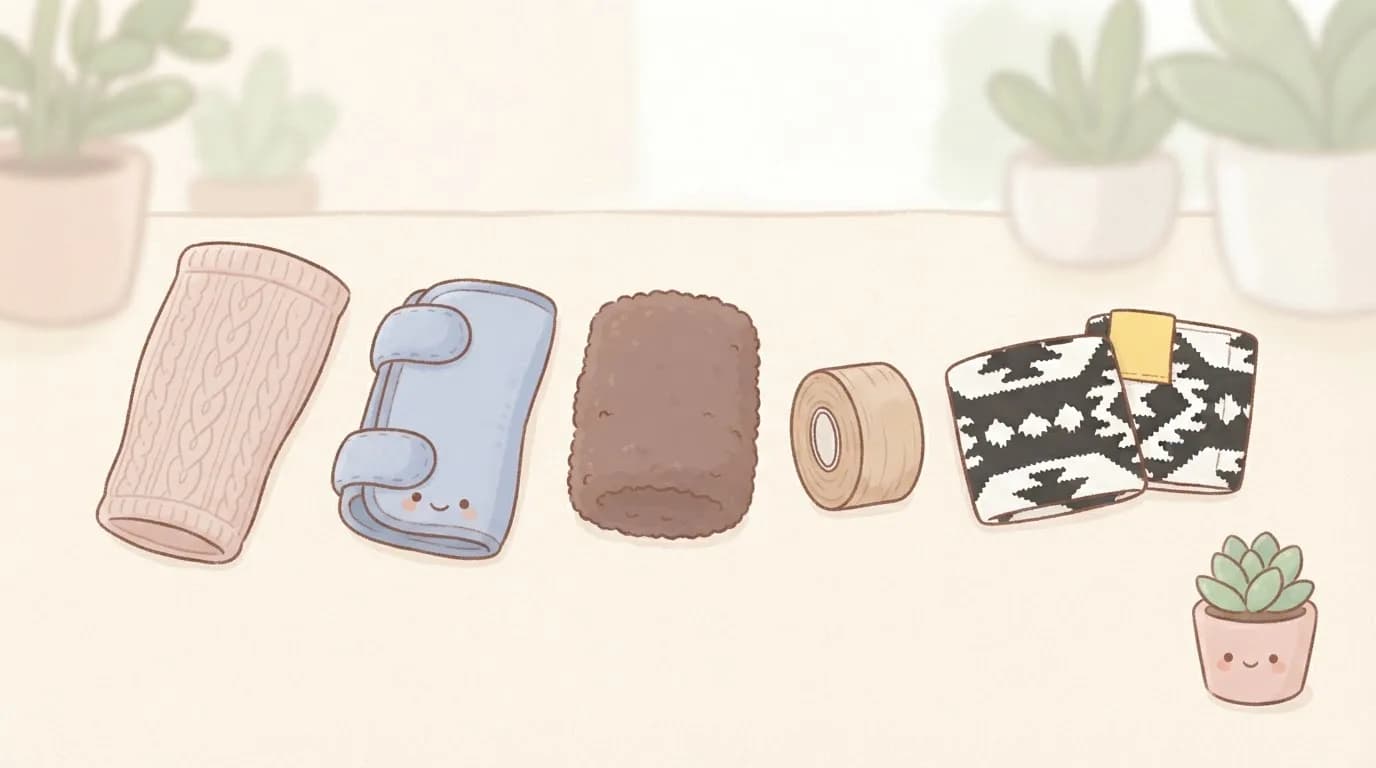
There are seven main types of wrist support: sweatbands, elastic compression wraps, compression sleeves, stiff lifting wraps, soft braces, rigid splints (including thumb spicas) and tape. They sit on a scale from "lets you move freely" to "holds your wrist still", and the right one depends on whether you need comfort and a bit of compression while you train or real protection while something heals.
This guide lays them all out side by side, so you can see what each one actually does before you spend money on the wrong thing. I teach pole every day and I've tried most of these on my own wrists, so I'll tell you honestly where each one shines and where it gets in the way.
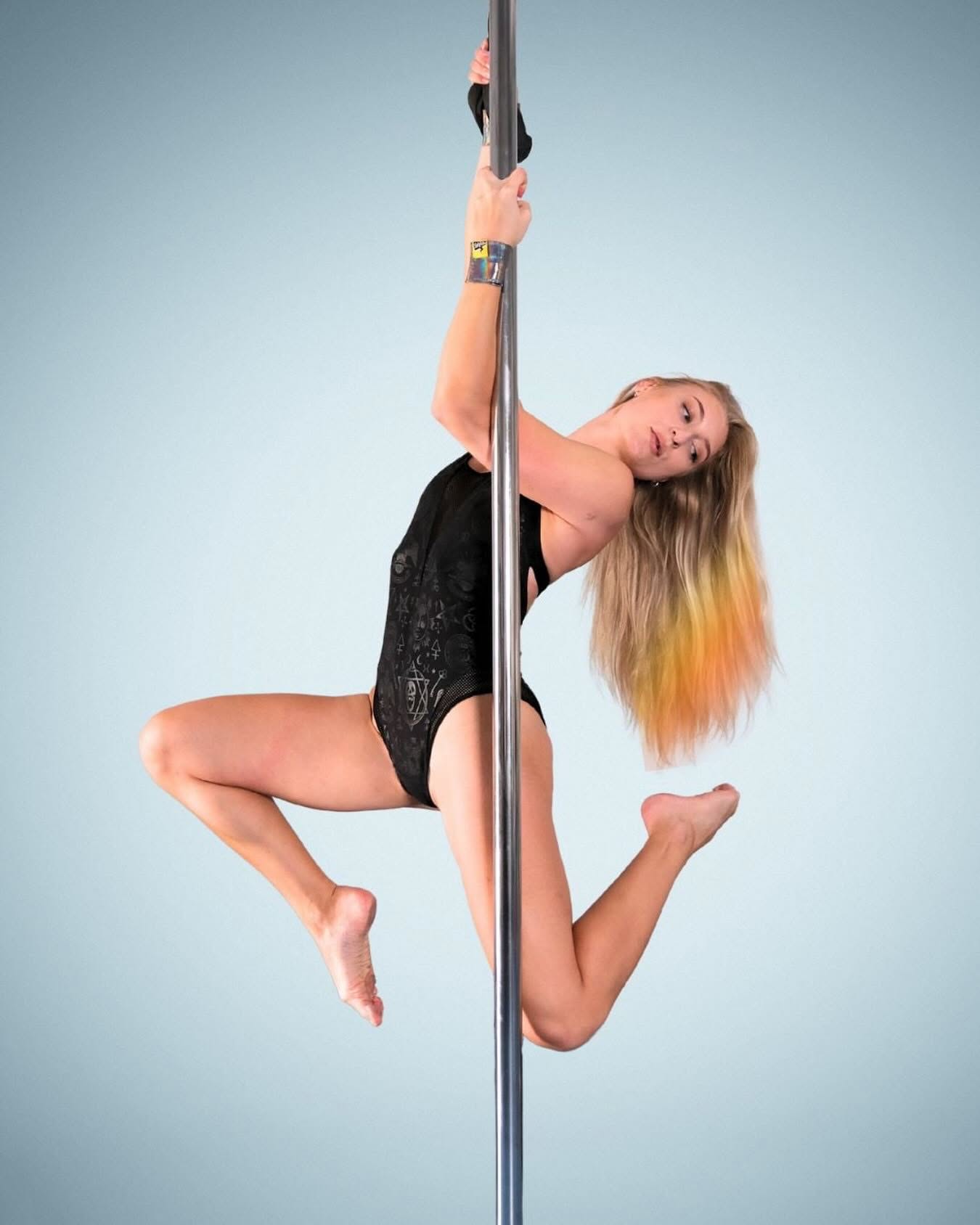
Wrist supports compared at a glance
| Type | What it is | How much you can move | Usually used for |
|---|---|---|---|
| Sweatband | Soft towelling loop | Completely free | Sweat and comfort, very little support |
| Elastic compression wrap | Firm elastic band that closes around the wrist | Almost full movement | Training where you bend and load the wrist: pole, handstands, push-ups, yoga |
| Compression sleeve | Pull-on knitted tube over wrist and forearm | Full movement | Warmth, light compression, everyday comfort |
| Lifting wrist wrap | Long, stiff strap wound tightly, often with a thumb loop | Limited, especially backwards bending | Heavy presses: bench, overhead, front squat |
| Soft brace | Neoprene or fabric brace with straps and sometimes flexible stays | Reduced | Sore or recovering wrists during daily tasks |
| Rigid splint or thumb spica | Brace with a firm metal or plastic stay, sometimes including the thumb | Very little | Night splinting, sprains or tendon problems when a clinician suggests it |
| Tape | Rigid athletic tape or stretchy kinesiology tape | Depends on how it's applied | Short-term support in sport, often applied by a physio |
Read the table left to right and you'll notice the trade-off: the more a support restricts movement, the more it protects an irritated wrist, and the less useful it is for a sport where your wrist has to bend under load.
What does each type of wrist support actually do?
Sweatbands
A sweatband is the simplest thing you can put on your wrist. It soaks up sweat before it runs into your palms, which matters more than you'd think if you're gripping a racket, a bar or a pole, but it doesn't compress the wrist in any meaningful way. Think of it as a comfort accessory, and if your wrists ache, a sweatband on its own won't change much.
Elastic compression wraps
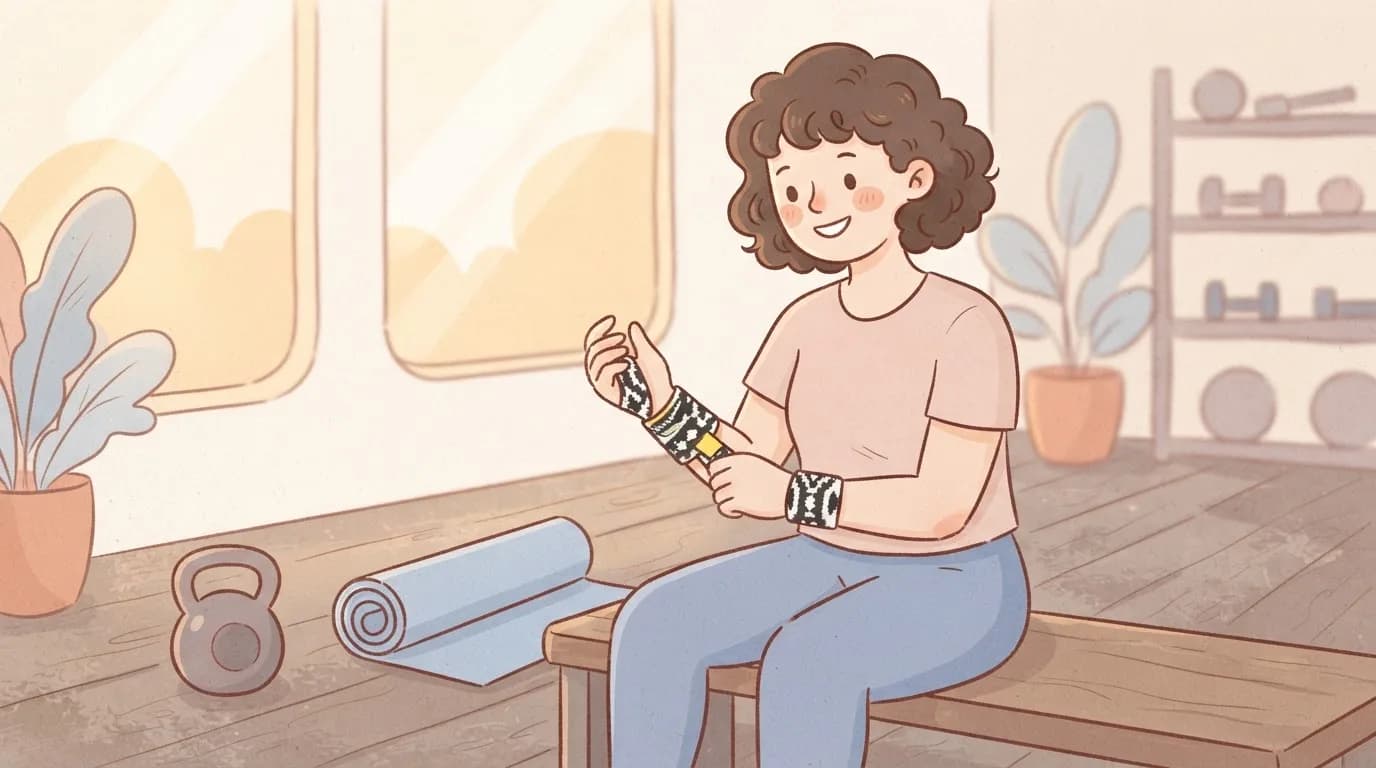
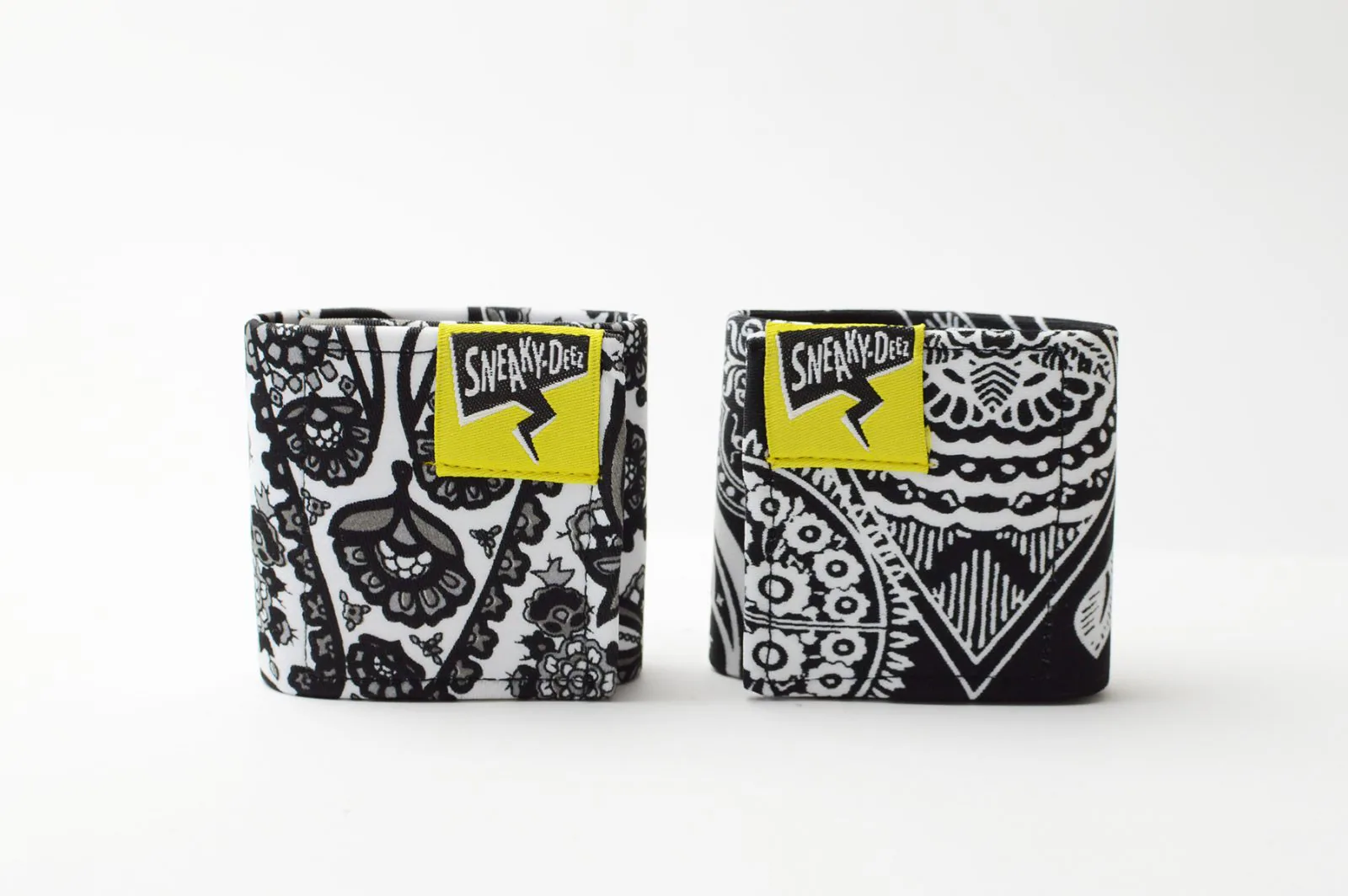
These are firm elastic bands, usually 6 to 10 cm wide, that close snugly around the wrist joint. They give an even squeeze around the joint and a feeling of being "held together", and because there's no splint inside, you can still bend your wrist fully. That's why they're popular in pole, aerial, calisthenics, handstand training and yoga, where a rigid brace would make the moves impossible.
This is the type I make. I designed SneakyDeez because I was teaching every day with sore wrists and everything I tried either did nothing or locked my wrist so I couldn't dance. Each pair is cut and sewn by hand from upcycled designer fabric, and you can read how our wraps are made if you're curious. If you want the full how-to on wearing them, read my guide to how to wear wrist wraps properly.
Compression sleeves
A sleeve is a knitted tube you pull on over your hand, and it usually covers part of the forearm too. The compression is lighter and more spread out than a wrap's, and you can't adjust the tightness, so the fit depends entirely on picking the right size. People like them for warmth and a comfortable, supported feeling during everyday tasks. I've written a separate piece on what wrist compression can and can't do, because the claims around sleeves get a bit wild.
Lifting wrist wraps
Powerlifting wraps are long, stiff strips of cotton or heavy elastic with a thumb loop. You wind them tightly in layers so the wrist can't fold backwards under a heavy barbell. They work well for that one job, and they're uncomfortable for almost anything else, because the whole point is to stop movement. Don't confuse them with lifting straps, which I'll explain below.
Soft wrist braces
A soft brace is usually neoprene or a breathable fabric with one or more hook-and-loop straps, and some have flexible plastic stays sewn in. They limit movement more than a wrap and less than a splint. You'll often see them in pharmacies sold for "wrist strain", and they're a reasonable choice for getting through daily tasks while a sore wrist settles. I go into much more detail in what a wrist brace is and when you need one.
Rigid splints and thumb spicas
A splint has a firm stay, usually metal or hard plastic, running along the palm side of the wrist so it stays straight. The NHS suggests a wrist splint worn at night for carpal tunnel syndrome because keeping the wrist straight takes pressure off the nerve (NHS: Carpal tunnel syndrome). A thumb spica is a splint that also holds the thumb, and it's commonly used for thumb-side tendon pain like De Quervain's. These are medical supports, so the best person to tell you whether you need one and how long to wear it is a doctor, physio or hand therapist.
Tape
Rigid athletic tape can limit how far the wrist bends, which is why gymnasts and climbers use it, while kinesiology tape is stretchy and barely restricts anything. Tape is cheap and flexible in how you use it, but it's single use, it can irritate skin, and getting it right takes practice. It's also worth knowing that reviews of kinesiology tape research have found little evidence that it does more than a placebo for most musculoskeletal problems (Journal of Physiotherapy review), so if you like how it feels, great, just don't expect it to fix anything.
Wrist wraps vs wrist straps: are they the same thing?
They're completely different, and mixing them up is one of the most common mistakes I see in gyms. Wrist straps are loops of webbing that wind around a barbell to help your grip on heavy pulls like deadlifts and rows. They support your grip, and they do nothing for the wrist joint itself. Wrist wraps go around the joint to support it. If your grip gives out first, you want straps, and if your wrists ache when you push or bear weight, you want a wrap. My guide to wrist wraps vs straps vs braces goes through which one suits pole, lifting and recovery.
Which type of wrist support should I choose?
Start with what you're doing and how your wrist feels, because the same wrist might need a different support at different times.
- Your wrist is fine but tires or aches when you train: an elastic compression wrap gives support without taking away movement. This covers most pole dancers, handstand fans and people who get achy wrists from push-ups or yoga.
- You lift heavy and your wrists fold back under the bar: stiff lifting wraps for your top sets, and nothing on your warm-up sets. There's more on this in wrist support for lifting weights.
- You do gymnastics or tumbling with a lot of impact through the hands: gymnasts use a mix of wraps, padded supports and tape, which I've covered in the best gymnastic wrist supports.
- You want warmth and gentle compression for everyday life: a sleeve or a soft wrap is comfortable and easy.
- You wake up with numb or tingling fingers: that pattern is often linked to carpal tunnel syndrome, and a night splint is the support usually suggested, but get it checked first.
- You've just hurt your wrist, or the pain is sharp and specific: skip the shopping and see someone. A brace or splint may well be part of the plan, and they'll tell you which.
If you're still on the fence, my decision guide on when to use wrist support walks through the "should I or shouldn't I" question in more depth.
Masha's tip: Bring your support to class and try a full session in it before you decide it works. Something that feels great while you stand in the shop can feel very different halfway through an inverted move or your twentieth push-up.
Can you combine different types of wrist support?
Sometimes, yes. Some people wear a sleeve for warmth during the warm-up and then switch to a firmer wrap for the hard part of the session. Gymnasts often tape under a padded support. What doesn't make sense is stacking two firm supports on top of each other, because the layers press on the wrist unevenly and it's hard to tell if anything is too tight.
How should any wrist support fit?
Whatever type you choose, the fit rules are the same. It should feel firm and secure, and your hand below it should look and feel normal. If your fingers tingle, go cold or numb, or change colour, take it off and loosen it. Red marks that fade within a few minutes are normal, while deep marks that last a long time mean it's too tight.
For wraps and braces, size matters as much as type. SneakyDeez go by wrist circumference, so measure first with the help of my guide on how to measure your wrist size, and if you're between two sizes, take the smaller one for firmer support.
When is a wrist support the wrong answer?
A support helps you train more comfortably, but it can't fix an injury and it shouldn't be used to push through pain that's telling you to stop. See a doctor or physio if you have swelling or bruising after a fall, numbness or tingling that doesn't go away, pain at night, a weak grip, or pain that hasn't improved after a couple of weeks of taking it easy. Our article on common causes of wrist pain can help you work out what might be going on before your appointment.
For everyone else, a well-fitted wrap and a sensible warm-up go a long way, and washing your wraps gently keeps the elastic firm for longer. If you train with friends, you can each pick your own design and share one parcel through a group order.
Everything in this guide
- Wrist Wraps vs Straps vs Braces: Which One Do You Actually Need?Wraps support the joint, straps help your grip and braces rest an injured wrist. This short guide helps you pick the right one for pole, lifting or recovery.
- How to Measure Your Wrist Size for Wrist Wraps (With Size Chart)A one-minute guide to measuring your wrist with a tape measure or a strip of paper, plus our size chart in centimetres and inches and what to do if you're between sizes.
- How to Wash Wrist Wraps So the Elastic Stays FirmA simple hand wash routine for fabric wrist wraps, plus how to dry them, get rid of smells, store them and tell when a pair has done its job.
- Upcycled Fabric: How SneakyDeez Wrist Wraps Are MadeWhere the fabric for your wraps comes from, why we reuse designer samples instead of new rolls, and how every pair is cut and sewn by hand in Slovenia.
- What Is a Wrist Brace, and When Do You Actually Need One?A wrist brace is built to limit movement so a sore wrist can rest. Here's how braces work, the main types, and how to tell if you need one or a flexible wrap.
- Wrist Compression for Support and Recovery: What It Does and What It Doesn'tAn honest look at wrist compression: what it does, what the research says, how tight it should feel and how long to wear it, from someone who makes compression wraps.
- The Best Gymnastics Wrist Supports: What Gymnasts, Calisthenics Athletes and Pole Dancers UseA guide to the wrist supports gymnasts actually use, from elastic wraps to padded supports and tape, plus what works for calisthenics and pole and how to choose.
- When Should You Wear Wrist Support? A Simple Decision GuideWrist support is brilliant for some situations and pointless for others. Here's how to tell which one you're in, and how to use support without leaning on it.
- How to Wear Wrist Wraps Properly: Placement, Tightness, Sizing and CareWhere to place your wrist wraps, how tight they should feel, how to pick the right size and how to wash them, with the mistakes I see most often in class.
Questions people ask
What is the difference between a wrist brace and a wrist wrap?
A brace usually has straps and often a stiff stay that limits how far the wrist can bend. A wrap is a firm elastic band that compresses the joint while still letting you move it. Braces suit sore or healing wrists, and wraps suit training where you need full movement.
Which wrist support is best for working out?
For bodyweight training like push-ups, handstands, yoga and pole, a flexible elastic compression wrap usually works best because it supports without blocking movement. For very heavy barbell presses, many lifters use stiff powerlifting wraps on their heaviest sets only.
Is a compression sleeve the same as a wrist wrap?
Not quite. A sleeve is a pull-on knitted tube with lighter, fixed compression that often covers part of the forearm. A wrap closes around the wrist so you can set the tightness yourself and usually feels firmer.
What is a thumb spica splint used for?
A thumb spica holds both the wrist and the thumb still. It is commonly used for thumb-side tendon problems such as De Quervain's tenosynovitis or after certain thumb injuries, usually on the advice of a doctor or hand therapist.
Does kinesiology tape support the wrist?
Kinesiology tape is stretchy and restricts very little movement. Research reviews have found limited evidence that it works better than a placebo for most muscle and joint problems, though some people simply like how it feels. Rigid athletic tape gives more real restriction.
Can I wear a wrist support all day?
Light supports like sleeves are generally fine for longer wear if they fit well, but it is a good idea to take any support off regularly to let the skin breathe and check that your hand looks and feels normal. If a clinician has given you a brace or splint, follow their advice on hours.
Shop the fix
Wraps made for exactly this
Handmade in Slovenia by a pole teacher, with firm compression that sits low on the wrist.
Sources we checked
Written by
Masha Pinner
Pole dance teacher at Pandora Art of Pole in Slovenia and former fashion designer. Masha started SneakyDeez in 2017 after years of teaching on sore wrists, and she still designs every pair.
Read Masha’s story