The short version
- Pain on top of the wrist that only appears with weight on a bent-back wrist is often irritation at the back of the joint, which is common in gymnasts and lifters.
- A soft lump that changes size is usually a ganglion cyst, while a hard, fixed bump in line with the index or middle finger may be a carpal boss.
- If you fell on your hand and the thumb side is still tender after a day, get it checked, because a scaphoid fracture can feel like a sprain and may not show on the first X-ray.
- Never try to burst a ganglion yourself, and see a doctor if a lump grows, hardens or becomes painful.
- Changing how you load the wrist, gentle movement and gradual strengthening help most training-related soreness settle.
Pain that feels like it's "on the bone" of your wrist usually sits on the back of the wrist or on one of its bony bumps. The most common reasons are a pinched joint lining from bending the wrist back under load, a ganglion cyst, a bony lump called a carpal boss, or an injury to one of the small wrist bones after a fall. If you fell on your hand and it hurts on the thumb side, get it checked, because a scaphoid fracture can feel just like a sprain.
When people tell me their wrist hurts "on the bone", they're usually pointing at the top of the wrist, the side where your watch face sits, or at one of the knobbly bits around it. In this guide I'll walk you through what those bumps are, which ones are normal, what can make them sore, and how to tell whether you can look after it yourself or need someone to examine it. For a wider overview of every kind of wrist pain, start with our guide to wrist pain causes.
Which bones are you actually feeling?
It helps to know what's normal before you worry about what isn't. Turn your palm down and run your fingers over the back of your wrist and you'll find a few landmarks:
- The knob on the pinky side is the end of your ulna, one of your two forearm bones. Everyone has it and it's more visible when your palm faces down.
- The ridge on the thumb side is the end of the radius, the bigger forearm bone, which carries most of the load when you lean on your hand.
- The area between them is where your eight small carpal bones sit, in two rows. You can't feel them individually very well, but this is where many "top of the wrist" pains live.
- The hollow at the base of your thumb, which appears when you lift your thumb up, is called the anatomical snuffbox. The scaphoid bone sits right underneath it.
So a bony bump on its own isn't a problem. What matters is whether it's new, painful, growing, or appeared after an injury.
What causes pain on the top of the wrist bone?
Pinching when you bend your wrist back
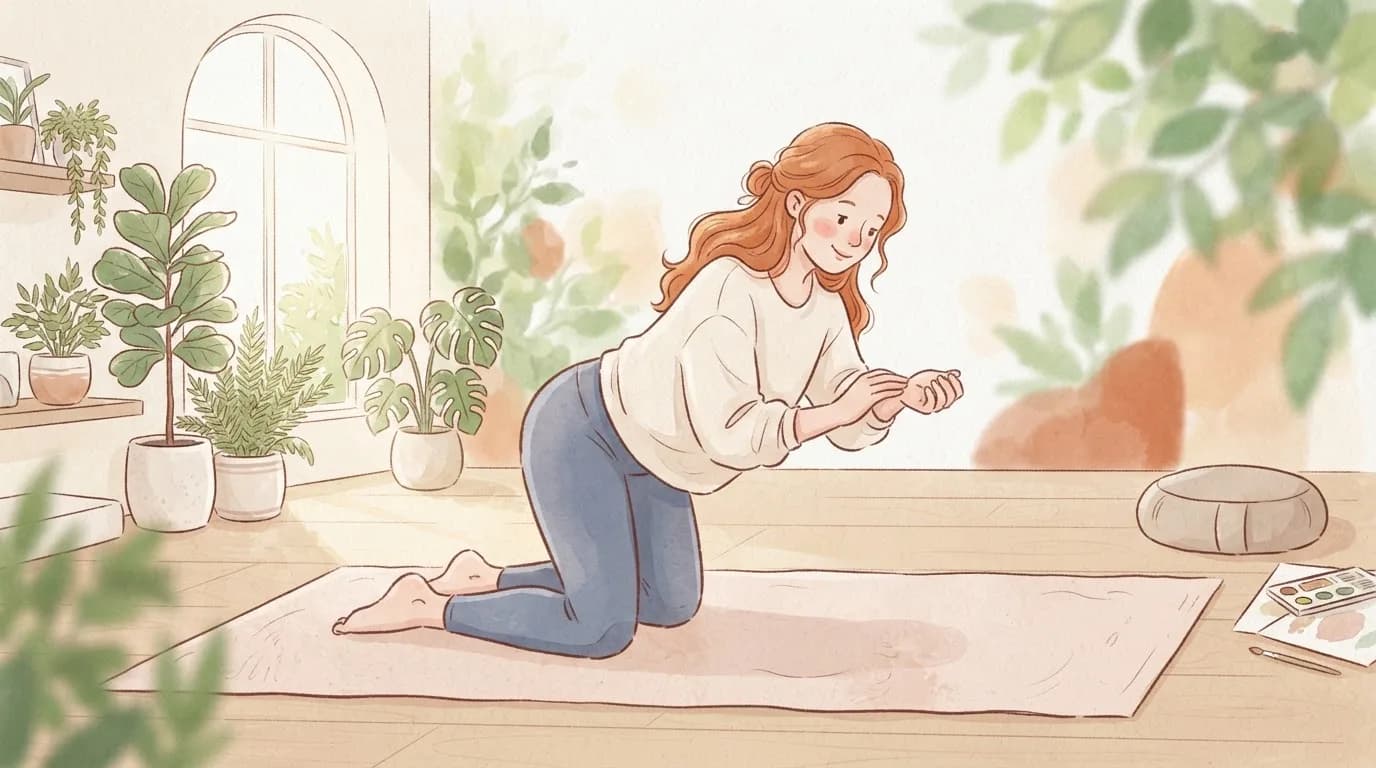
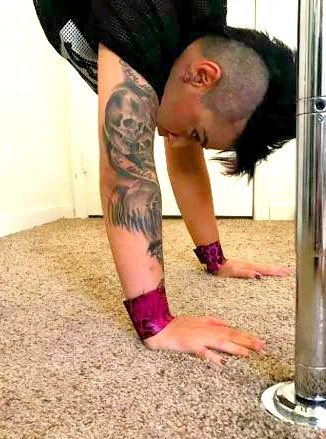
If your wrist only hurts on top when you put weight through it with the wrist bent back, like in push-ups, planks, downward dog, handstands or pole floorwork, the most likely culprit is irritation of the soft tissue at the back of the joint. Sports doctors sometimes call this dorsal wrist impingement, and it's well known in gymnasts and weightlifters. The pain is very position-specific, so everyday tasks feel fine while that one position catches and pinches. We go into the positions and fixes in detail in wrist pain when bent.
A soft lump that comes and goes: ganglion cyst
A ganglion is a smooth, fluid-filled lump that grows out of the tissues around a joint, and the back of the wrist is its favourite spot. According to OrthoInfo, ganglions are harmless, they're most common between the ages of 15 and 40, they affect women more than men and they're common in gymnasts, who stress their wrists a lot. They often get bigger with activity and smaller with rest. Many are painless, but some ache when you bend the wrist back.
The NHS says many ganglions go away on their own over months, and that you shouldn't try to burst one yourself, which includes the old trick of hitting it with a heavy book. If it's painful, a doctor can drain it or, if it keeps coming back and bothers you, it can be removed.
A hard bump that doesn't move: carpal boss
A carpal boss is a small bony lump on the back of the hand, just beyond the wrist, roughly in line with your index or middle finger. It's an overgrowth of bone where the hand bones meet the carpal bones. People sometimes mistake it for a ganglion, but it feels hard and doesn't move or change size. Plenty of people have one without any pain, though it can get sore if a tendon rubs over it or if you bump it. A doctor can usually tell a boss and a ganglion apart by examining it, sometimes with an X-ray or ultrasound.
Pain on the bone after a fall
This is the one I want you to take most seriously. Falling onto an outstretched hand can break the end of the radius (the most common wrist fracture) or one of the carpal bones. The scaphoid is the carpal bone that breaks most often, and OrthoInfo describes the usual signs as pain and swelling in the snuffbox area on the thumb side, which gets worse when you pinch, grip, push or move your thumb. The tricky part is that the wrist may not look very swollen and you might still be able to move it, so people often decide it's a sprain and carry on. Scaphoid fractures don't always show up on the first X-ray either, and because the bone has a limited blood supply, a missed one can heal badly. If you fell and the thumb side is still tender after a day, please get it examined.
A deep ache in the middle of the wrist
Less commonly, a dull ache right in the middle of the back of the wrist, with stiffness and sometimes swelling, can come from problems with the lunate bone (one rare condition is called Kienböck's disease) or from early wear in the joint, especially after an old injury. These need a doctor and imaging to diagnose, so they're not something to guess at, but it's worth knowing they exist if a central ache won't settle.
Young athletes and growing bones
If you teach or train teenagers who do a lot of weight-bearing on their hands, like gymnasts, tumblers or young pole and aerial students, be aware that the growth plate at the end of the radius can get irritated by repetitive loading. Wrist pain that keeps coming back in a growing athlete should always be checked by a doctor rather than trained through.
How can you tell which one you have?
You can't diagnose yourself with certainty, but asking these questions will help you describe it clearly to a professional:
| Question | If the answer is yes, it points towards |
|---|---|
| Did it start with a fall or a bang? | A sprain or fracture, so get it checked |
| Is there a soft lump that changes size? | A ganglion cyst |
| Is there a hard, fixed lump in line with your index or middle finger? | A carpal boss |
| Does it only hurt with weight on a bent-back wrist? | Impingement or irritation at the back of the joint |
| Is it a constant, deep ache with stiffness, even at rest? | Something that needs imaging, such as a bone or joint problem |
What can you do about it at home?
If there was no injury, the pain is mild and you don't have any of the warning signs listed further down, these steps are a sensible place to start:
- Change the position before you change everything. If weight-bearing on a bent-back wrist is the trigger, try push-ups on your fists or on parallettes, put a folded mat under the heel of your hand to reduce the angle, or work on your forearms for a while.
- Calm it down. Rest from the moves that hurt and use a cold pack wrapped in a towel for up to 20 minutes at a time after training if it's sore.
- Keep moving gently. Pain-free wrist circles and gentle bends keep the joint from stiffening. A short daily routine like our wrist warm-up for pole and aerial works well.
- Build back gradually. Once the pain has settled, strengthen the forearm and grip and slowly reintroduce load. Our guide on how to strengthen your wrists has progressions you can follow.
- Leave lumps alone. Don't press, massage hard or try to burst a ganglion, just keep an eye on whether it's changing.
Masha's tip: If the top of your wrist gets grumpy from lots of floorwork, the change that usually helps most is loading it differently for a few weeks, with more work on your forearms, fists for push-ups and a properly warmed-up wrist before every class. It feels slow, but it gives the tissue a real chance to calm down.
Some people with load-related soreness on the back of the wrist find a firm wrap comfortable while they train, because the compression gives a feeling of support and the warmth is pleasant on a cold joint. A wrap is only for that kind of training niggle, though. It doesn't belong on a wrist that might be broken, and it won't shrink a ganglion or a carpal boss.
When should you see a doctor about pain on your wrist bone?
Get urgent help if, after a fall or knock, your wrist is badly swollen, bruised or looks misshapen, if you heard a crack, if you can't move it or grip, or if your hand goes numb or changes colour. A lump that's hot, red and very painful also needs urgent attention.
See your GP, a physio or a hand specialist soon if:
- the thumb side is still tender a day or more after a fall, even if you can move your wrist
- a lump is growing, feels hard and fixed, or is painful
- the pain hasn't improved after two weeks of rest and sensible care
- it hurts at night or at rest
- you have numbness or tingling in your fingers that doesn't go away
- your grip is getting weaker
Most bony-feeling wrist pain turns out to be something manageable, and the cases that do need treatment do much better when they're caught early. So be kind to your wrist, change what's bothering it, and don't let anyone talk you out of getting a fall checked. If your pain sits on the little-finger side rather than on top, our article on pinky-side wrist pain is the better next read.
More in Wrist pain
- Wrist Pain Causes: Why Your Wrist Hurts and Where It Hurts
- Wrist Pain Medicine and Treatments: From Home Care to the Doctor
- Ulnar Impaction Syndrome: Symptoms, Diagnosis and Treatment
- De Quervain's Tenosynovitis: Thumb-Side Wrist Pain Explained
- Wrist Pain on the Pinky Side: Causes, Self-Care and When to Get Help
- Wrist Pain When Bent: Why It Hurts and 5 Ways to Ease It
- 10 Acupressure Points for Arm and Wrist Pain: A Gentle Self-Care Guide
Questions people ask
What is the bony bump on top of my wrist?
The knob on the little-finger side is simply the end of your ulna, which everyone has. A hard bump further down, roughly in line with your index or middle finger, may be a carpal boss, and a soft lump that changes size is more likely a ganglion cyst. A doctor can tell them apart with an examination and sometimes an X-ray or ultrasound.
Why does the top of my wrist hurt when I do push-ups?
Push-ups put your body weight through a wrist bent back to around 90 degrees, which can pinch and irritate the tissues at the back of the joint. Reducing the angle with fists, parallettes or a wedge under your palm, warming up properly and building strength gradually usually helps. If it doesn't settle in a couple of weeks, see a physio.
Can a ganglion cyst go away on its own?
Yes, many ganglions shrink or disappear by themselves over months. The NHS advises against trying to burst one, and if it's painful or limits what you can do, a doctor can drain or remove it.
How do I know if I've broken a bone in my wrist?
Severe pain, swelling, bruising, a changed shape, a crack heard at the time or not being able to move or grip all suggest a fracture and need urgent care. A scaphoid fracture can be subtle, so tenderness at the base of the thumb after a fall should be checked even if you can move your wrist.
Should I wear a wrist wrap if my wrist bone hurts?
If the soreness comes from training load and there was no injury, a wrap can feel supportive and warm while you work. It isn't suitable for a suspected fracture and won't treat a cyst or bony bump, so get those looked at first.
Shop the fix
Wraps made for exactly this
Handmade in Slovenia by a pole teacher, with firm compression that sits low on the wrist.
Sources we checked
Written by
Masha Pinner
Pole dance teacher at Pandora Art of Pole in Slovenia and former fashion designer. Masha started SneakyDeez in 2017 after years of teaching on sore wrists, and she still designs every pair.
Read Masha’s story