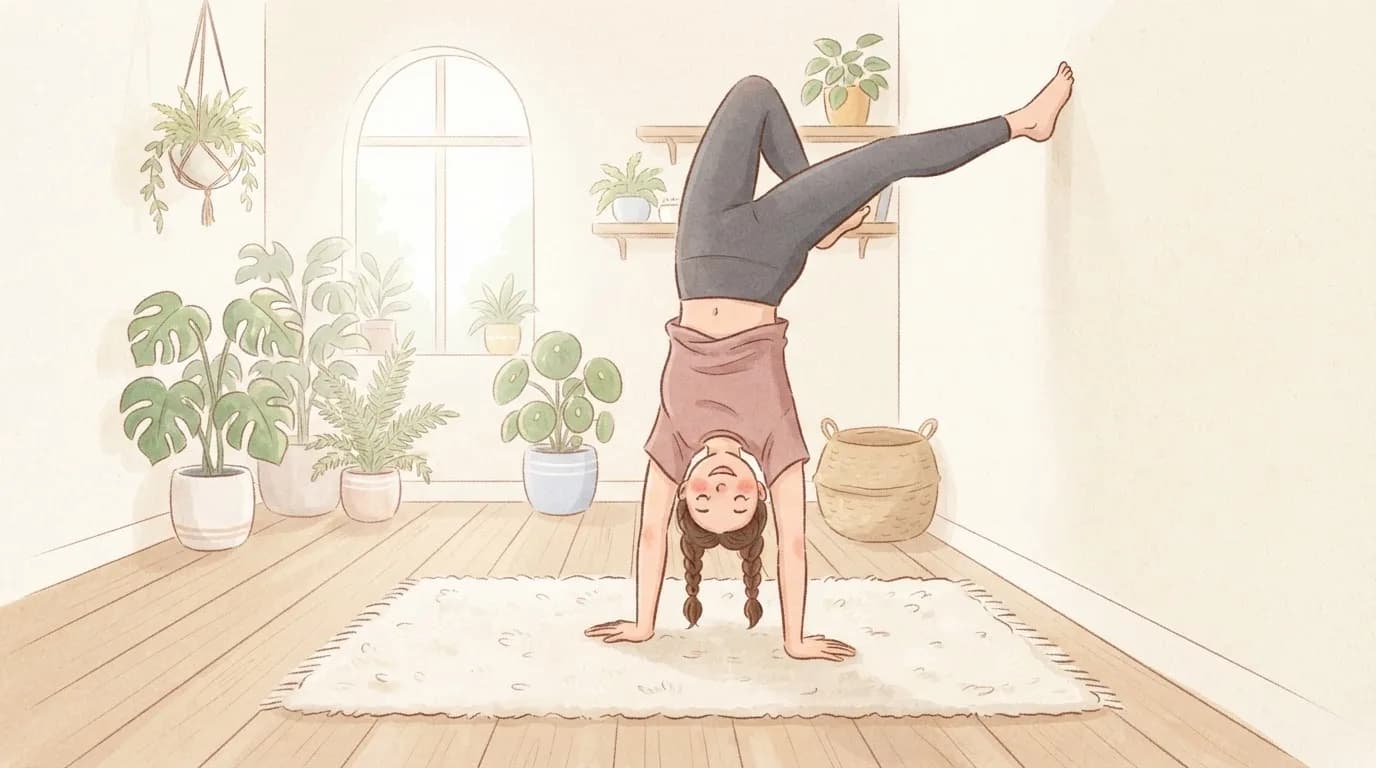
The short version
- Handstands load your whole body weight through a wrist bent back to around ninety degrees, so limited wrist extension, tight shoulders and soft surfaces all make pain more likely.
- Spreading your fingers and balancing with active fingertip pressure moves weight off the heel of the hand and helps protect the wrist.
- A five-to-seven-minute wrist warm-up before every session and two or three conditioning sessions a week help your wrists handle more load.
- Parallettes, blocks or a slanted board reduce wrist extension so you can keep training balance while your wrists build up.
- Pole, aerial and handstand work all load the same wrists, so count them together and add volume gradually.
Handstands hurt your wrists because they put your whole body weight through a joint bent back to around ninety degrees, often more than it's used to, and usually on hands that aren't sharing the load well. The fix is a mix of better hand position with active finger pressure, a proper wrist warm-up, building volume slowly, and using blocks or parallettes when your wrists need a straighter angle. Sharp, pinching or lingering pain is your cue to back off rather than push through.
This guide is just about handstands and other inversions on your hands. If your wrists hurt in regular yoga poses like down dog and plank, our guide to avoiding wrist pain in yoga covers those.
Why do handstands hurt your wrists?
Your feet and ankles are built to carry your body weight all day, and your wrists simply aren't. In a handstand, the small bones and soft tissues of the wrist take everything, while the joint sits in deep extension. A few things make that harder than it needs to be.
- Not enough wrist extension. If your wrist doesn't comfortably bend back to a right angle, the tissues at the back of the wrist get squeezed as you stack over your hands.
- Tight shoulders. When your shoulders can't open fully overhead, your body leans forward past your hands to find balance, and the wrists bend even further back to make up for it.
- Weight in the heel of the hand. Without active fingers, everything sinks into the base of the palm, right over the joint.
- Soft surfaces. Thick mats, carpet and grass let your hands sink, which deepens the bend and makes balancing harder work.
- Too much, too soon. Handstands are addictive. Going from a few kick-ups a week to dozens a day is the classic way wrists get overloaded, because tendons and ligaments adapt more slowly than your enthusiasm.
What should your hands do in a handstand?
In a handstand your hands hold you up and do the balancing at the same time, so setting them up well both spreads the load and gives you control.
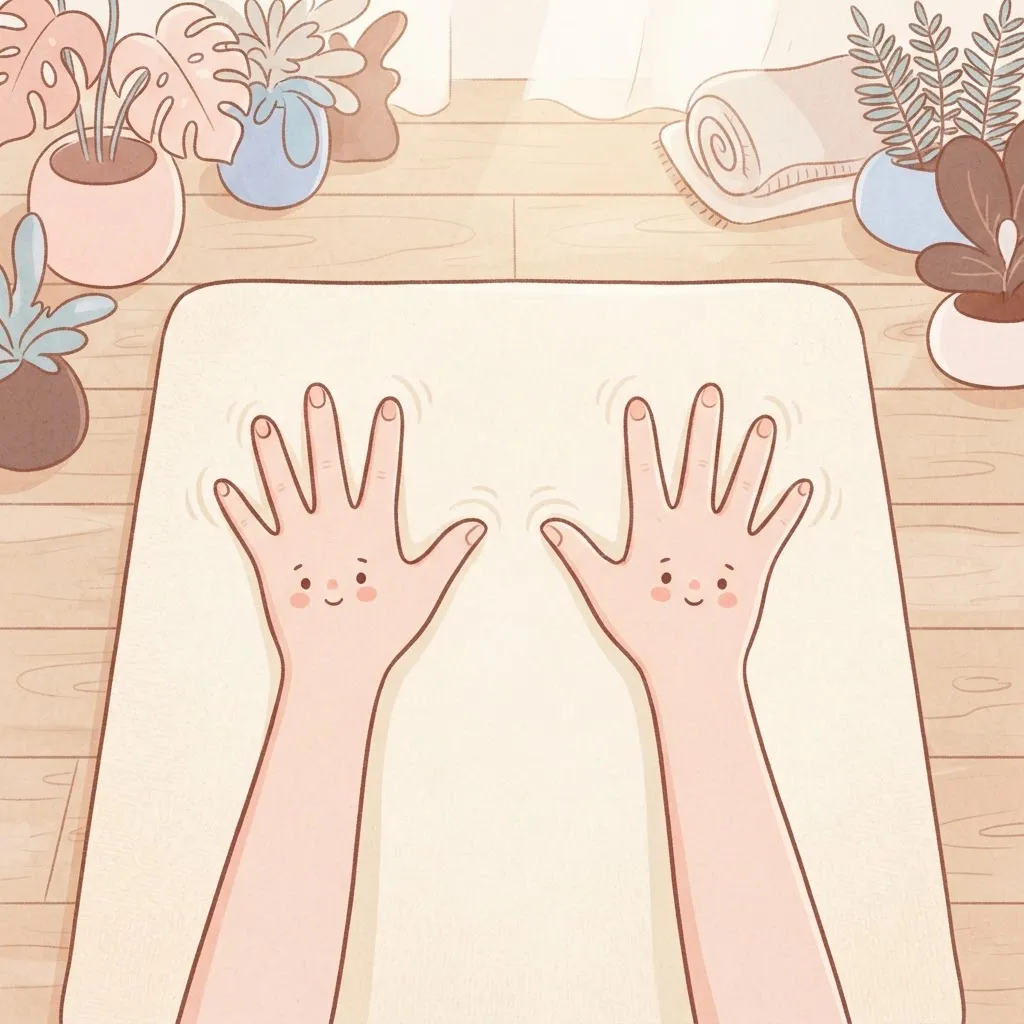
- Place them shoulder-width apart with your middle fingers pointing forward or turned very slightly out, whichever feels better for your wrists.
- Spread your fingers comfortably wide so your hand is as big a base as possible.
- Press the whole hand down, with the knuckles and the base of the index finger working as hard as the heel of the hand.
- Cup the hand slightly, so the centre of the palm lifts a little and the fingertips grip the floor.
- Use your fingertips to steer. If you start to fall towards your back, press harder through the fingertips to pull yourself back over your hands. That's finger pressure, and it's the main way handstanders balance.
Good finger pressure is also wrist protection. When your fingers are active, some of the weight moves forward off the heel of the hand, and the muscles of the forearm help hold the wrist steady instead of the joint just hanging there.
How do you warm up your wrists for handstands?
Do this every session, even if you're only planning a few kick-ups. It takes about five to seven minutes, and everything should feel comfortable.
- Wrist circles with loose fists, 10 each way.
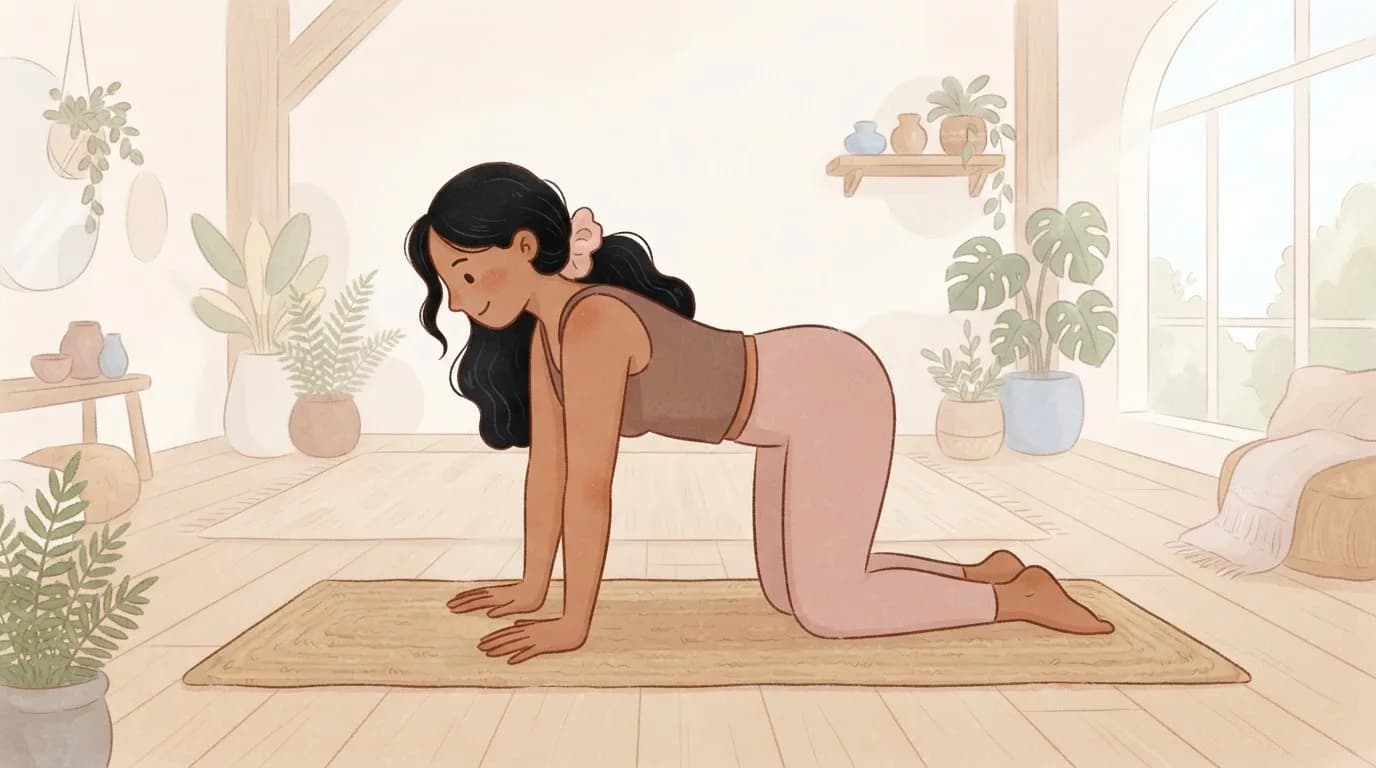
- Tabletop rocks. On hands and knees, rock slowly forward over your hands and back, 10 to 15 times, going a little further each time as long as it stays comfortable.
- Turned-out and reversed hands. Turn your fingers sideways for 5 slow rocks, then towards your knees for 5 gentle leans back.
- Palm lifts. In tabletop, lift the heels of your hands and press through the fingertips and knuckles, 10 slow reps.
- Fingertip pulses. In a plank or knees-down plank, shift your shoulders forward of your hands and then press through the fingers to bring them back, 10 times. This rehearses the finger pressure you'll use upside down.
- Shoulder openers. A few slow arm circles and a gentle chest-to-wall or puppy pose stretch, so your shoulders can open and your wrists don't have to compensate.
Pole and aerial people will recognise a lot of this from our wrist warm-up for pole and aerial, which works just as well before handstand practice.
Masha's tip: If your studio is cold, take twice as long over the warm-up, because cold wrists feel stiffer and need more time to get going.
How do you condition your wrists for handstands?
Conditioning is the slower work that makes your wrists more capable over weeks and months. Two or three times a week, after practice or on other days, add a few of these.
- Wrist curls and reverse wrist curls with a light dumbbell, 2 to 3 sets of 12 to 15 slow reps, aiming for a mild burn in the forearm.
- Loaded wrist rocks. Tabletop rocks with a bit more weight, holding the end range for 2 to 3 seconds, 2 sets of 10.
- Fingertip plank holds. Plank on your fingertips or with palms lifted, 3 holds of 10 to 20 seconds, knees down if you need to.
- Pike or wall holds where your feet stay on a box or wall, so your wrists get used to the load at a lower weight.
For full routines, have a look at our progressive plan for stronger wrists.
Which handstand progressions are easiest on the wrists?
Work through the steps in order, and only move on when the current one feels steady and your wrists feel fine the next morning.
- Plank and shoulder taps to get used to weight on your hands with active fingers.
- Pike hold on a box, with your hips over your shoulders and your feet on a box or sofa, holding for 10 to 30 seconds.
- Wall walk to a chest-to-wall handstand, walking only as high as you can control, for short holds.
- Back-to-wall kick-ups, practising the kick and finding balance with the wall as a safety net.
- Freestanding attempts, kept short and fresh, with plenty of rest between them.
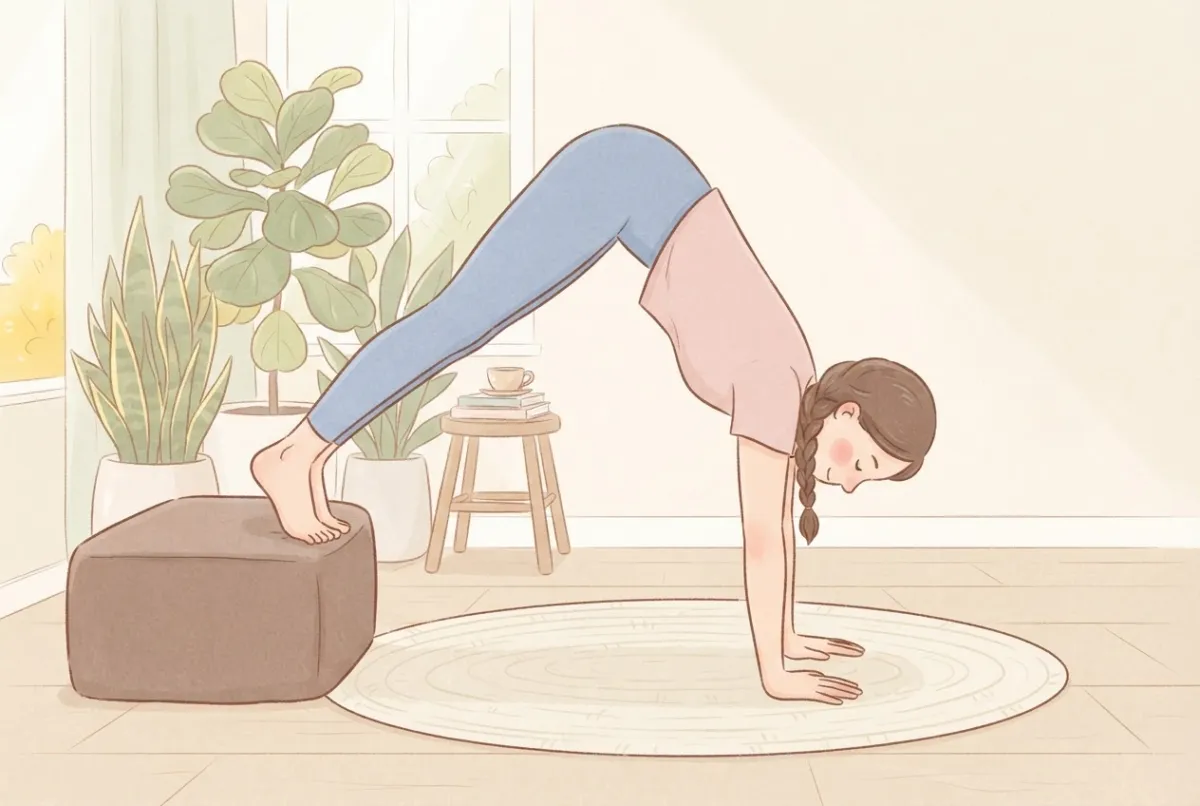
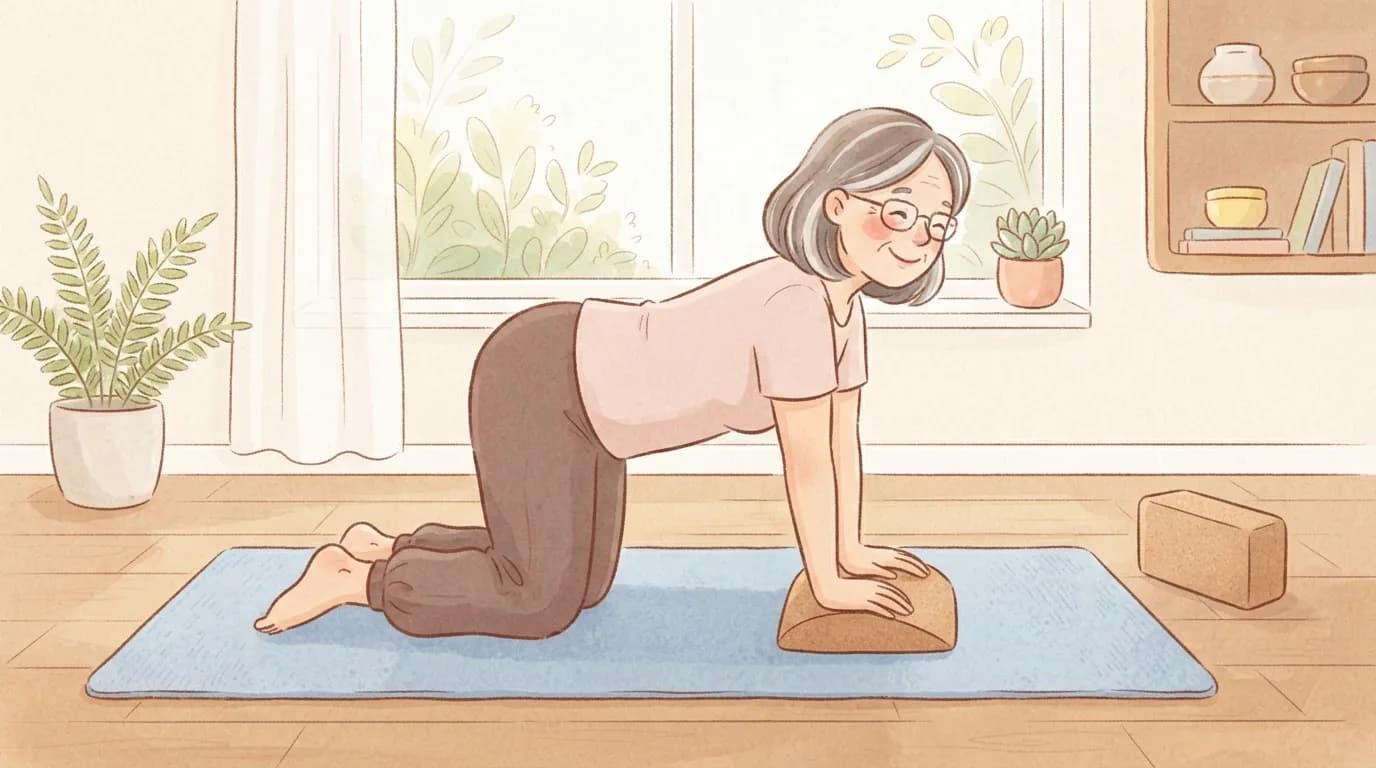
If extension is the problem, take your hands up onto parallettes, yoga blocks or a slanted board. Gripping parallettes keeps your wrist almost straight, which lets you keep training the balance while your wrists build up.
How much handstand practice is too much?
It varies a lot from person to person, so let your own wrists be the guide. Practise in short, quality sets of a few attempts with rest in between, and stop before you're exhausted. Have at least one or two days a week off from hand-balancing, and add volume slowly, a few extra attempts or seconds at a time. If your wrists feel achy or stiff the next morning, the previous session was too much, so make the next one lighter. If they're already sore, our yoga wrist pain remedies cover the first few days and how to ease back into practice.
What about pole, aerial and other upside-down training?
If you do pole, aerial hoop or silks as well as handstands, add it all up, because your wrists don't know which class they're in. Floor handstands in pole class, handsprings, hoop mounts and hanging grips all load the same joint in different ways. On a heavy pole week, keep your handstand session lighter, and spread the hardest days apart. Our guides to wrist pain in pole dancing and wrist care for aerial hoop and silks go into those sports in detail.
Do wrist wraps help with handstands?
Lots of handstanders and calisthenics people train in wraps. A snug wrap gives compression and warmth and helps the wrist feel more stable under load. SneakyDeez sit low on the wrist, so your palm and fingers are completely free to do the finger-pressure work that keeps you balanced, and they're firm without locking the joint. They don't replace warming up, conditioning or sensible volume, and they won't make a sore wrist safe to load. Our guide to yoga and handstand wrist support compares wraps with props and braces if you're choosing.

When should you stop and get your wrist checked?
Stop handstand practice and change something if you get a sharp pinch at the back of the wrist every time it bends, pain on the pinky side that clicks or makes your grip feel weak (Physiopedia: TFCC injuries), or pain that's there the next morning and getting worse week by week. See a GP or physio if it hasn't improved after two weeks of easing off, keeps coming back, or comes with numbness or tingling, and get urgent help after a fall onto your hands if your wrist is very painful, misshapen or you can't move it (NHS: Wrist pain).
Be extra careful with children and teenagers who love handstands. Repeated weight-bearing on the hands while the bones are still growing can irritate the growth plate at the end of the forearm, a problem known as gymnast's wrist (Orthobullets: Gymnast's wrist). Wrist pain in a young person who does a lot of hand-balancing should always be checked by a doctor rather than trained through.
More in Yoga & handstands
- How to Avoid Wrist Pain in Yoga: Hand Set-Up, Alignment and Props
- Types of Wrist Pain in Yoga: What Your Pain Is Telling You, Plus 6 Tips for Relief
- Best Yoga Wrist Support: Wraps, Braces or Props?
- Yoga Wrist Pain Remedies: What to Do When Your Wrist Already Hurts
- Tips to Prevent Wrist Pain in Yoga: Warm-Up, Sequencing and When to Back Off
Questions people ask
Is it normal for wrists to hurt when learning handstands?
Mild tiredness while your wrists get used to the load is common, especially in the first weeks. Sharp or pinching pain, pain that lasts into the next day or pain that keeps getting worse isn't something to push through. Ease off, check your hand set-up and build up more slowly.
How do I make handstands easier on my wrists?
Warm up your wrists before every session, spread your fingers and use fingertip pressure to balance, practise on a firm surface, and keep sessions short with rest days in between. Parallettes or blocks keep the wrist straighter if extension is the problem.
Are parallettes better for your wrists than the floor?
For many people they're more comfortable, because gripping a parallette keeps the wrist close to straight instead of bent back. The balance feels a little different, so lots of people mix both and use parallettes on days when their wrists feel sensitive.
Should I do handstands every day?
Some experienced handstanders do, but most people do better with a few short sessions a week and at least one or two days off from hand-balancing. If your wrists feel achy or stiff the next morning, give them more rest before the next session.
Do wrist wraps help with handstands?
Many people find wraps make handstands feel more stable and comfortable thanks to compression and warmth. Choose a wrap that sits on the wrist and leaves your palm and fingers free, so you can still use finger pressure to balance.
Can handstands damage a child's wrists?
Lots of repeated weight-bearing on the hands while bones are still growing can irritate the growth plate at the end of the forearm, sometimes called gymnast's wrist. Any ongoing wrist pain in a child or teenager who does a lot of handstands should be checked by a doctor.
Shop the fix
Wraps made for exactly this
Handmade in Slovenia by a pole teacher, with firm compression that sits low on the wrist.
Sources we checked
Written by
Masha Pinner
Pole dance teacher at Pandora Art of Pole in Slovenia and former fashion designer. Masha started SneakyDeez in 2017 after years of teaching on sore wrists, and she still designs every pair.
Read Masha’s story