Wedges, blocks, wraps and braces all promise happier wrists on the mat, but they solve different problems, so this guide helps you pick the right one for your practice.
✓Props like wedges and firm blocks change how far your wrist bends, while wraps change how supported and warm the wrist feels as it works.
✓Rigid braces hold the wrist still, which suits rest or sleep when a clinician recommends it but fights poses like downward dog.
✓A good yoga wrap gives firm compression, sits low on the wrist and leaves your palm and fingers free to press into the mat.
✓A wrap should feel snug but never squeeze, with normal colour and no tingling in your fingers.
✓Pick your wrap by wrist circumference, and choose a narrower width for a lower profile or a wider one for more coverage.
The best yoga wrist support depends on what your wrists need. If bending back is the problem, a wedge or a firm block that changes the angle helps most. If your wrists feel tired, cold or wobbly in longer flows, a snug elastic wrap that still lets the wrist bend is usually the most comfortable choice. Rigid braces that stop the wrist moving don't suit yoga poses, so keep those for when a GP or physio recommends one.
I'll be honest about where our own wraps fit, because they won't be the right answer for everyone. If you want the hand set-up and alignment side first, read how to avoid wrist pain in yoga, since no support works well on top of a hand that's sinking into the mat.
What kinds of wrist support are there for yoga?
There are two families, and they solve different problems. Props change the position of your wrist, and supports you wear change how the wrist feels while it works.
Option
What it does
Best for
Trade-offs
Yoga wedge
Raises the heel of the hand so the wrist bends back less
Pain on top of the wrist in down dog, plank and tabletop
Another thing to carry, and you need to place it for each pose
Firm blocks
Bring the floor closer so you lean less onto your hands
Plank, lunges, standing poses with hands down
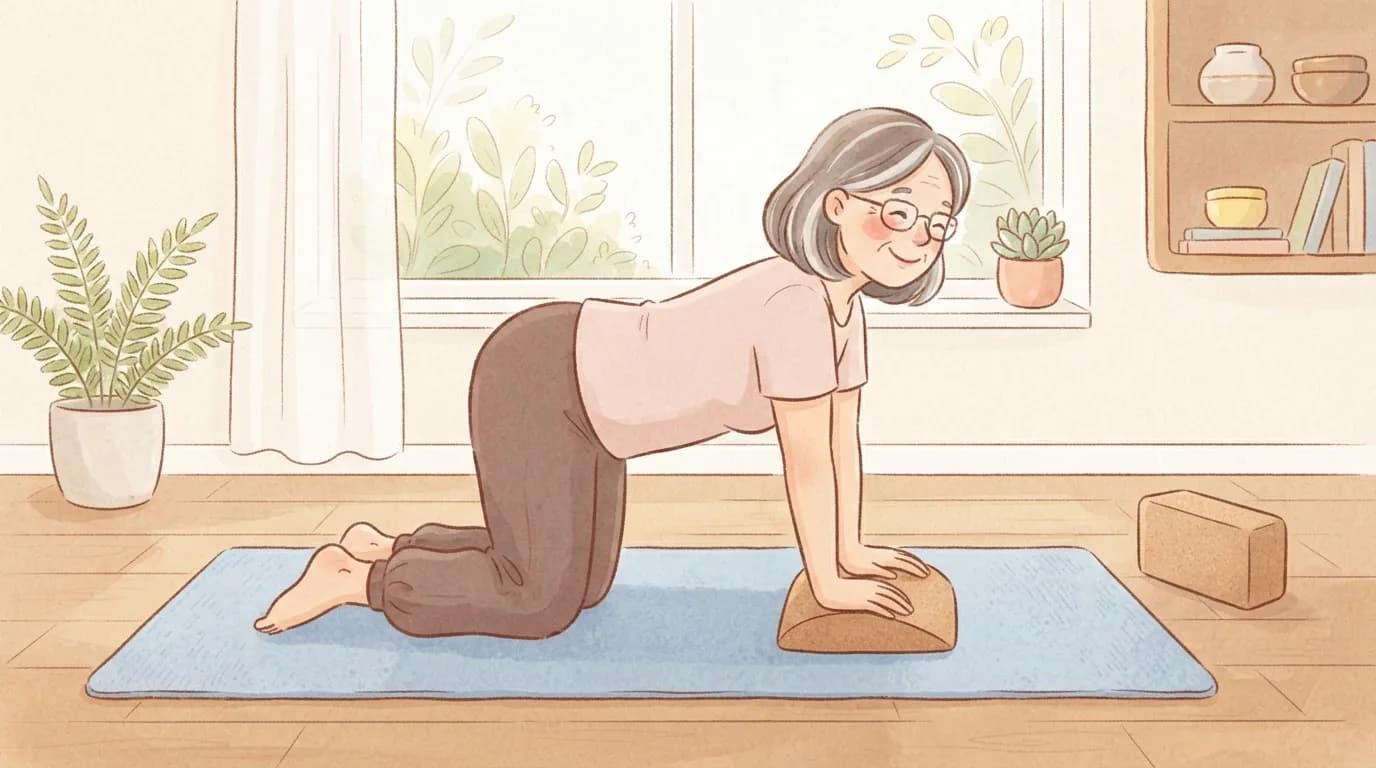
Soft foam lets the hands sink, so go for cork or firm foam
Fists or push-up handles
Keep the wrist straight
Tabletop, plank, knees-down push-ups
Harder to balance on and can be tough on the knuckles
Elastic wrist wraps
Snug compression and warmth while the wrist still bends
Long flows, arm balances, tired or wobbly-feeling wrists
They don't change the angle, so pair them with good set-up
Compression sleeves or gloves
Light, even compression over a larger area
Comfort and warmth, sometimes for achy hands
Usually lighter support, and gloves can cover the palm you need to grip with
Rigid braces or splints
Hold the wrist still in one position
Rest, sleep or recovery when a clinician recommends it
Too restrictive for poses that need the wrist to bend
Wrist wraps or a wrist brace for yoga: what's the difference?
A brace is built to limit movement. Many have a stiff stay or splint along the palm side that holds the wrist straight, which is useful when a doctor wants the joint rested, for example at night with carpal tunnel symptoms (Cleveland Clinic: Carpal tunnel syndrome). The trouble in yoga is that down dog, plank and tabletop all need your wrist to bend back, so a brace either fights the pose or gets crushed into your palm.
Wraps work the other way round, hugging the joint with elastic compression so the wrist feels held and warm while it can still bend into the pose. That's why most yogis who wear something in class reach for a wrap. If you're wondering how braces work more generally, we explain them in what a wrist support brace is.
What should you look for in a yoga wrist wrap?
It shouldn't lock the wrist. You want firm support with the joint still free to bend into down dog. If you can't get your hand flat on the mat with it on, it's the wrong kind.
It should sit low and leave your hand free. Your palm and fingers need to spread and press into the mat. Anything that covers the heel of the hand or bunches into the palm gets in the way.
Adjustable compression. Velcro lets you set it firmer for arm balances and a bit looser for a gentle flow.
The right width. A narrower wrap feels lower-profile and freer, while a wider one covers more of the wrist and feels more supportive. Neither is better, so it comes down to what you prefer.
The right size. A wrap sized to your wrist circumference gives even pressure. One that's too big has to be pulled very tight to feel anything.
Comfortable fabric. You'll sweat in a hot flow, so pick something soft on the skin and easy to wash.
How tight should a wrist wrap be for yoga?
It should feel snug and supportive without squeezing. Your hand should keep its normal colour, your fingers shouldn't tingle or go numb, and you should be able to slide a fingertip under the edge. If anything changes, loosen it straight away. Many people loosen or take their wraps off for long seated or lying parts of class and put them back on for the stronger sections.
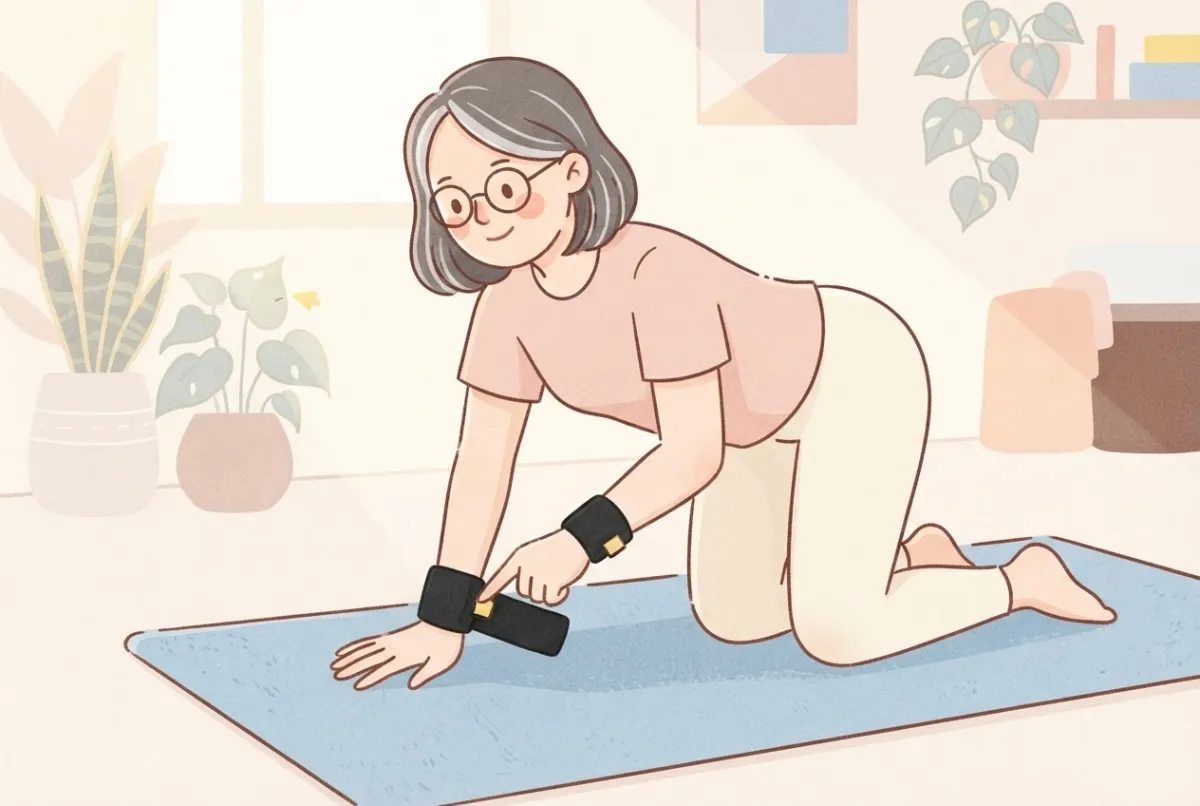
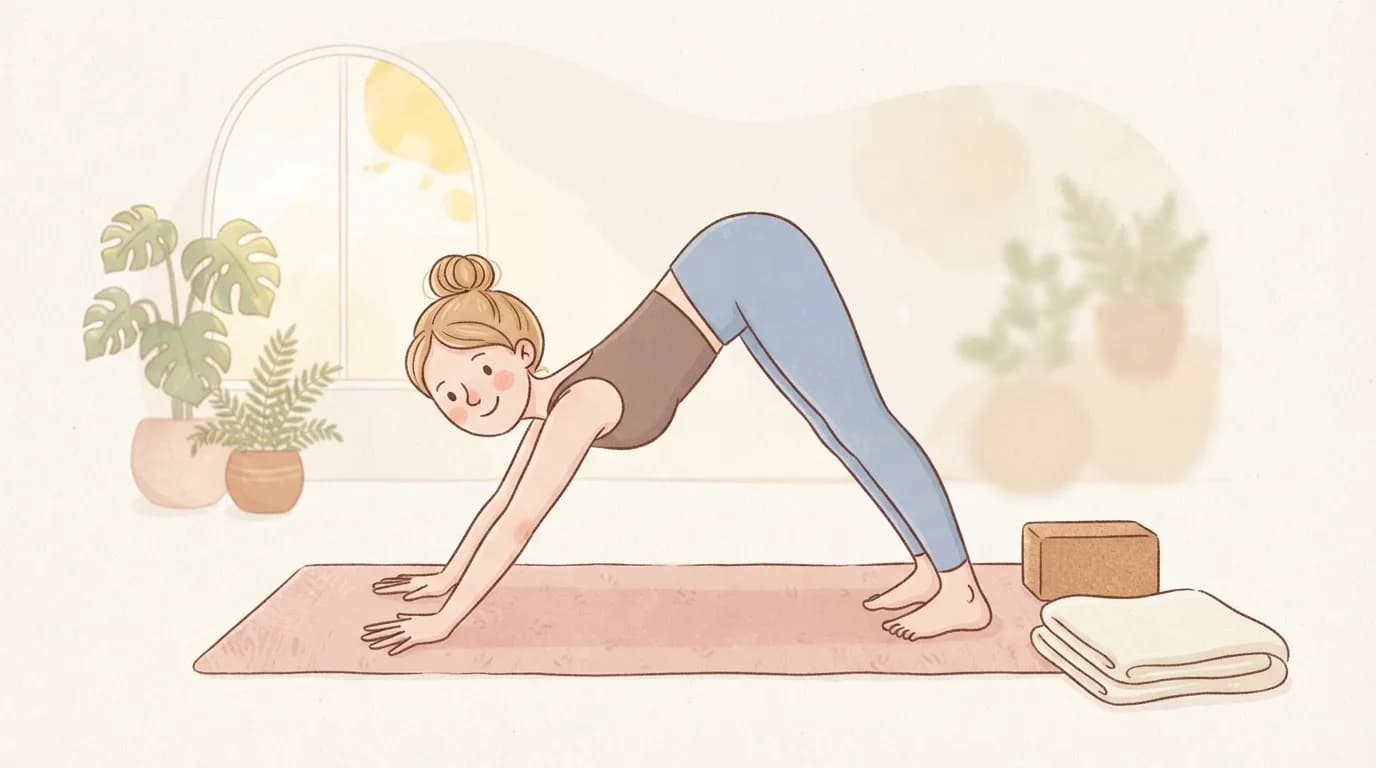
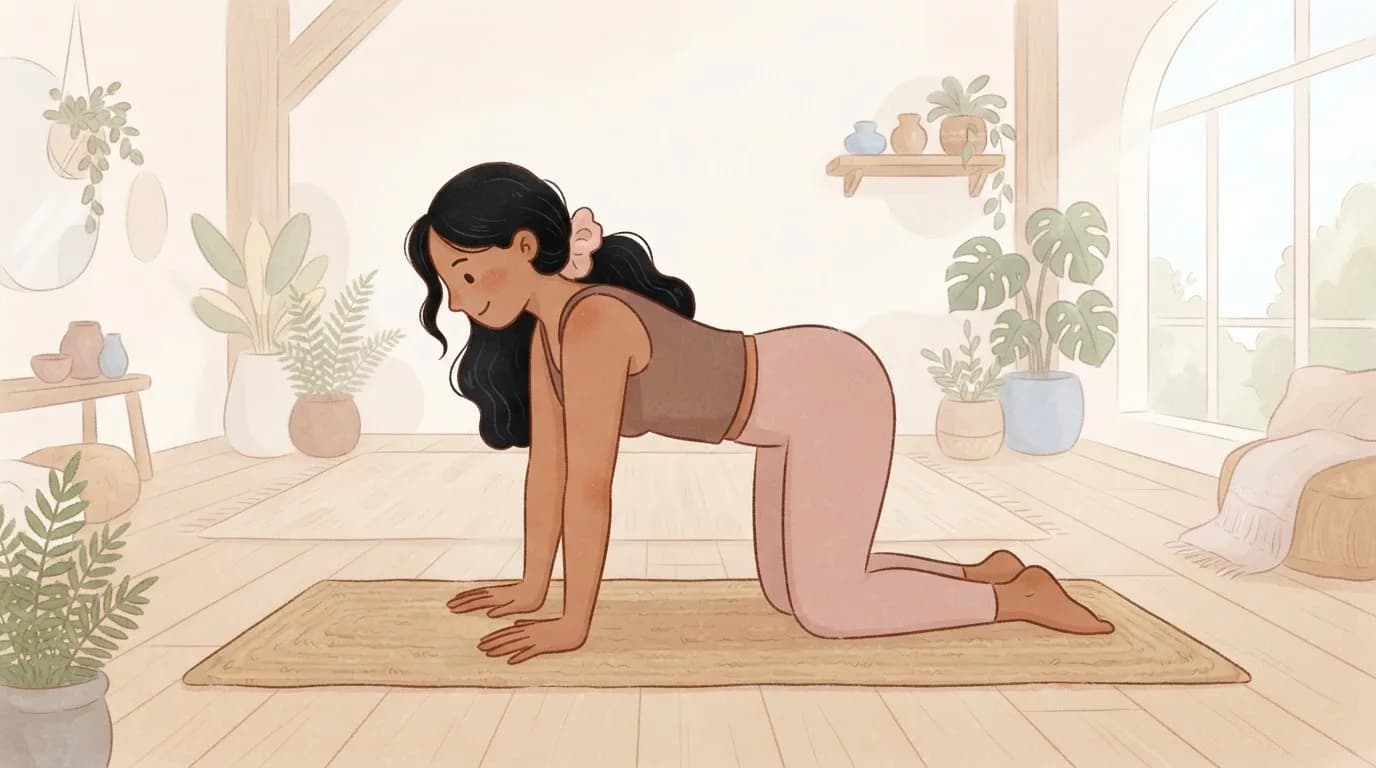
Masha's tip: Put your wraps on in tabletop with your hands flat on the mat. That way you fasten them around the wrist in the actual position it'll be working in, and they won't feel too tight once you get into down dog.
Fastening your wraps in tabletop sets them around the shape your wrist is in when it takes weight.
Where do SneakyDeez fit for yoga?
I designed SneakyDeez for pole, after years of teaching every day with sore wrists and not finding anything that gave strong support without locking the joint. Yoga turned out to need the same thing, which is why lots of yogis wear them.
They give firm elastic compression where the load goes and sit low on the wrist, so your hands stay completely free to spread and press into the mat. Each pair is handmade in Slovenia from upcycled designer fabric, and they come in two widths: 6 cm if you want something low-profile, and 8 cm if you want more of the wrist covered.
The wraps sit low on the wrist, so your hands and fingers are completely free.
What they won't do is change the angle of your wrist. If your pain is a sharp pinch on top of the wrist every time it bends back, a wedge will probably help you more, and lots of people use both. They're also a support and not a medical device, so they don't treat an injury.
How do you choose the right size?
Measure around your wrist joint with a soft tape, or with a piece of string that you then lay against a ruler. Our sizes go by circumference: XS is under 14.5 cm, S is 14.5 to 15.5 cm, M is 16 to 17.5 cm and L is over 18 cm. XS and L pairs are made to order, and if you're between sizes the smaller one gives firmer support, or we can make a pair to measure. There's a step-by-step guide in how to measure your wrist size.
Which support for which yoga practice?
Gentle hatha, yin and restorative. Most people don't need anything. A wedge is handy for the odd tabletop.
Vinyasa and power yoga. Lots of repeated weight-bearing, so wraps for comfort and a wedge or fists for the poses that pinch work well together.
Arm balances and handstands. Wraps at a firmer setting are popular, alongside proper wrist conditioning. Our handstand wrist pain guide covers the training side.
Coming back from a sore wrist. Follow a gradual return like the one in our yoga wrist pain remedies guide, and use support for comfort while you rebuild.
When is a wrist support the wrong answer?
If your wrist hurt after a fall, is swollen, feels weak, or you have numbness or tingling that doesn't go away, get it checked before you reach for any support. The NHS also recommends seeing a GP if wrist pain hasn't improved after two weeks of home care or keeps coming back (NHS: Wrist pain). Support can make training more comfortable, but it shouldn't hide pain that needs a proper diagnosis.
Many people find that wraps make weight-bearing poses feel more comfortable and stable, thanks to the compression and warmth. They don't change the angle of the wrist, so they work best together with good hand set-up and props like a wedge when needed.
Can I wear a wrist brace during yoga?+
Most rigid braces stop the wrist bending, which makes poses like downward dog and plank awkward or impossible. If a doctor or physio has asked you to wear a brace, ask them whether to wear it during practice or only at rest.
Is a yoga wedge better than wrist wraps?+
They do different jobs. A wedge reduces how far the wrist bends back, which suits pain on top of the wrist, and wraps add compression and warmth. Lots of people use both.
What size wrist wrap do I need for yoga?+
Measure around your wrist joint with a soft tape. SneakyDeez sizes are XS under 14.5 cm, S 14.5 to 15.5 cm, M 16 to 17.5 cm and L over 18 cm. XS and L are made to order, and made-to-measure is available if you're between sizes.
Should I choose a 6 cm or 8 cm wrap?+
The 6 cm width is lower profile and feels freer, while the 8 cm covers more of the wrist. It's mostly personal preference, so think about how much coverage you like and how much your wrist bends in your practice.
Shop the fix
Wraps made for exactly this
Handmade in Slovenia by a pole teacher, with firm compression that sits low on the wrist.
Pole dance teacher at Pandora Art of Pole in Slovenia and former fashion designer. Masha started SneakyDeez in 2017 after years of teaching on sore wrists, and she still designs every pair.