The short version
- Most wrist pain in yoga comes from too much weight sinking into the heel of the hand, so spreading the fingers and pressing through the knuckles is the first fix to try.
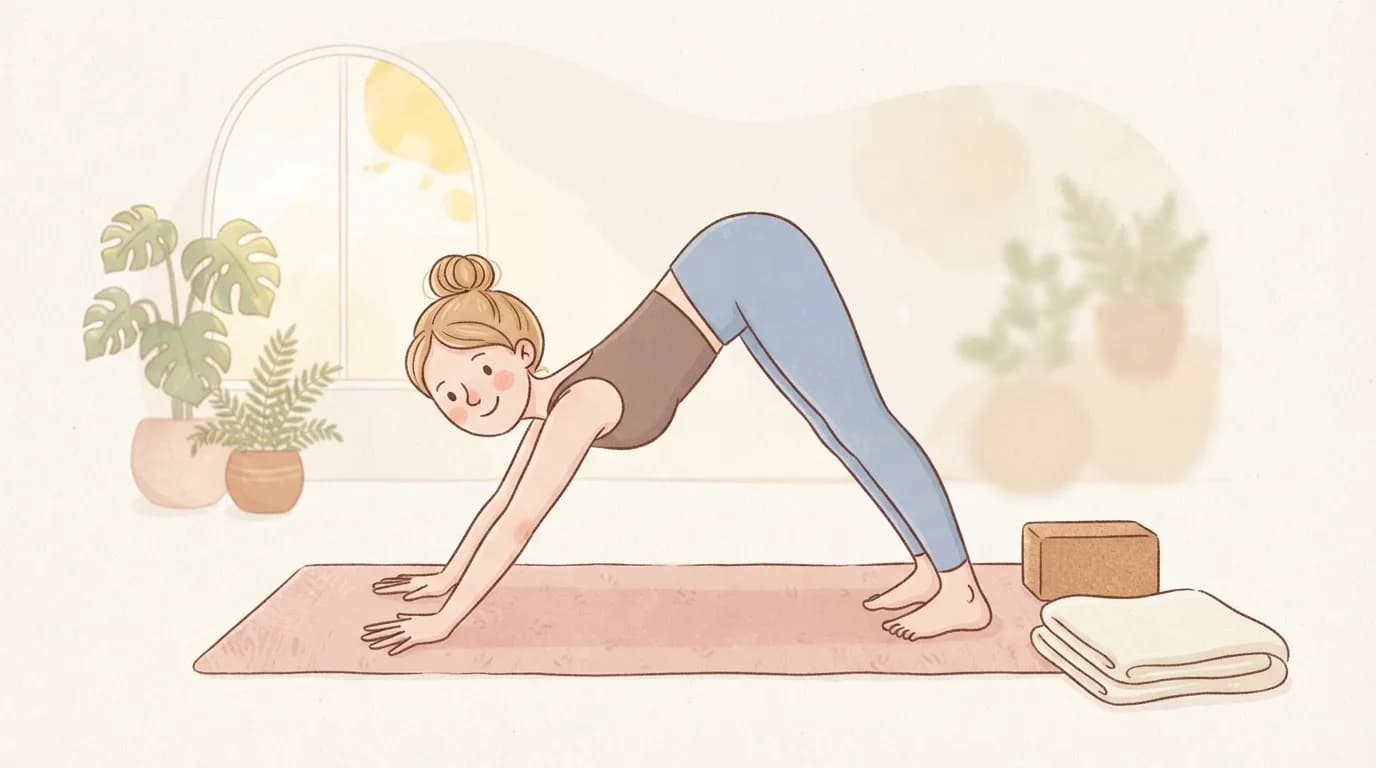
- In downward dog, sending your hips back and bending your knees moves weight into your legs and off your wrists.
- Keep your elbows over your wrists as you lower into chaturanga, and lower with knees down when your wrists are tired.
- A wedge or the rolled edge of your mat reduces how far the wrist bends back, while fists and forearm variations take the bend out completely.
- A soft, thick mat lets your hands sink and can make wrist pain worse, so a firmer mat or a block under your hands often helps.
The easiest way to avoid wrist pain in yoga is to change how your weight lands on your hands. Spread your fingers, press through the knuckles and the base of your index finger so the heel of the hand isn't taking everything, keep your shoulders working, and use a wedge, a block or your fists when your wrists need a gentler angle. Most sore yoga wrists come from set-up, so small changes in downward dog, plank and chaturanga make a big difference.
This guide is about the poses themselves: where your hands go, how to share the load, and which props are worth having. If you want the bigger picture of warm-ups, sequencing and how often to practise, read our habits for preventing wrist pain in yoga, and if your wrist already hurts, start with what to do when your wrist hurts after yoga instead.
Why do your wrists hurt in yoga?
Your wrists were built mostly for fine, clever movements, and then yoga asks them to hold up a big part of your body weight while bent back towards ninety degrees. In downward dog, plank, tabletop and every vinyasa, the back of the wrist closes and the front stretches, and the load goes straight through a stack of small bones and soft tissue.
That doesn't make yoga bad for wrists. A University of Sydney study of recreational yoga practitioners found that most of the new pain people put down to yoga was in the upper limbs, and the researchers pointed to weight-bearing poses like downward dog as a likely reason (University of Sydney summary of the study). The same study found that yoga improved existing pain for most people, so the goal is to keep practising and give your hands a better job to do.
The usual culprits are dumping weight into the heel of the hand, hands that sit too far forward or back, shoulders that switch off so the joints hang, a mat that's too squishy, and simply doing far more weight-bearing than your wrists are used to.
How should your hands be placed on the mat?
Hand set-up is the same for almost every pose where your palms are on the floor, so it's worth getting it right once and then checking it every time you come down.
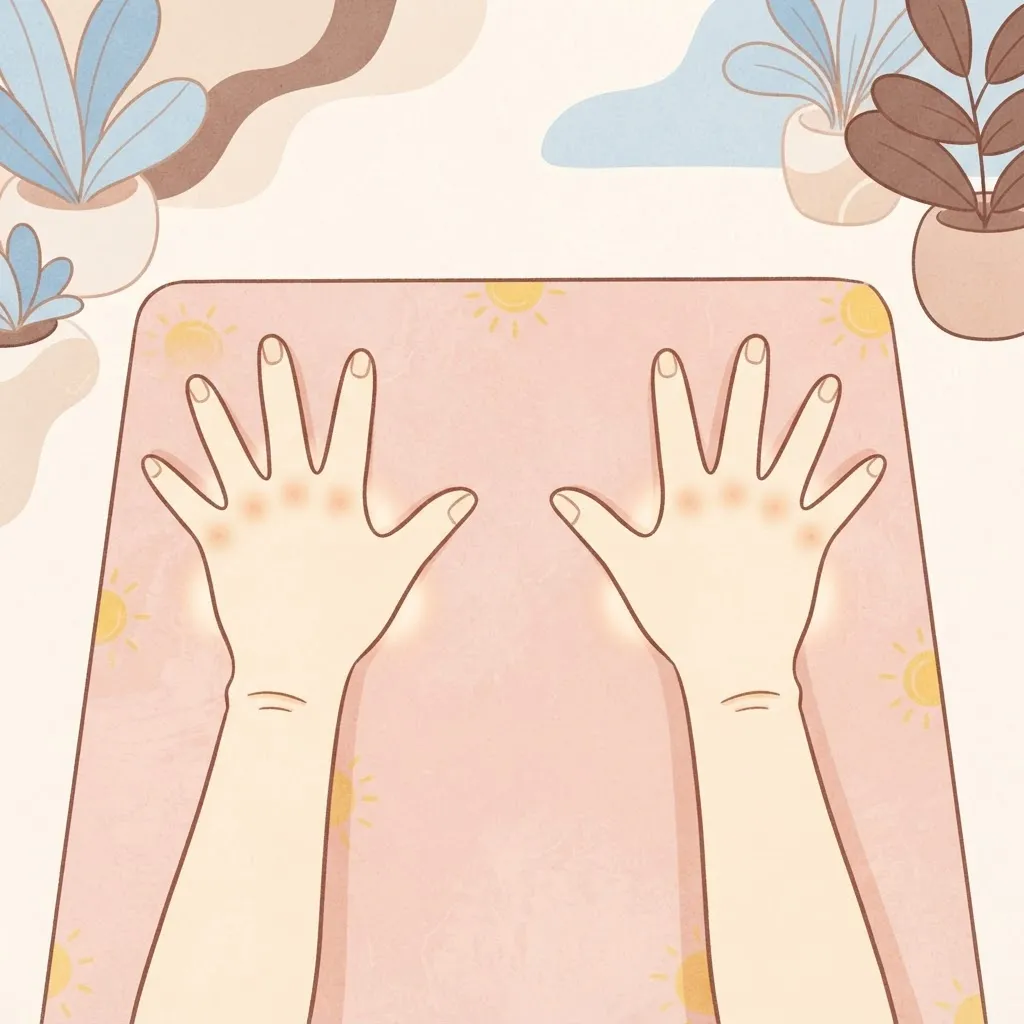
- Line up the wrist creases. Keep the crease of each wrist roughly parallel to the front edge of the mat. If your hands turn far in, the load shifts awkwardly onto one side of the wrist.
- Spread your fingers. Open them comfortably wide with the middle fingers pointing forward or very slightly out. A wider hand is a bigger base, so the pressure is shared.
- Press the knuckles, especially the index finger. Most people let the base of the index finger and thumb lift and sink into the outer heel of the hand. Push the whole knuckle line down, with a bit of extra press under the index finger.
- Lift the centre of the palm a little. Think of your hand like a suction cup, with the edges pressing down and the middle slightly domed. It should feel active rather than flat and heavy.
- Grip the floor lightly with the fingertips. You aren't clawing, but your fingertips should be awake and ready to take some weight off the wrist when you lean forward.
If you do this and your wrists still complain, that's useful information, because it usually means the angle or the amount of load is the issue rather than your technique. That's where props come in, further down.
How do I stop my wrists hurting in downward dog?
Downward dog should be a shape where your legs take a fair share of the weight, so wrist pain there usually means too much of you is going forward into the hands.
- Send your hips back and up. Bend your knees generously and push your sitting bones towards the wall behind you. As the weight moves back, your hands get lighter.
- Use your arms and shoulders. Gently turn the upper arms out and press the floor away so your shoulders lift away from your ears. When the shoulders switch off, the wrists end up holding the whole shape.
- Check the distance. If your hands are very close to your feet, your wrists bend further back. Walking the hands a little forward often opens the wrist angle.
- Don't hang in it too long. If your teacher holds down dog for a long time, it's fine to come down to child's pose for a few breaths and go back up.
How should your wrists feel in plank and chaturanga?
In a full plank your shoulders sit roughly above your wrists, your body is in one long line, and your core and legs are working. If your hips drop or your shoulders drift far forward past your hands, the wrists bend further back and take more load than they need to.
Chaturanga is the pose that most often tips sore wrists over the edge, because people lower down while lunging forward. Keep your elbows over your wrists as you lower, hug them in towards your ribs, and only go as low as you can control. Lowering with your knees on the mat is a proper version of the pose, and it's often the smarter choice when you're doing lots of vinyasas in one class.
Upward dog adds a backbend on top of extended wrists, so keep your shoulders back and broad and your hands under your shoulders. Cobra or baby cobra takes most of the load off the wrists if you need a break.
What about tabletop, side plank and arm balances?
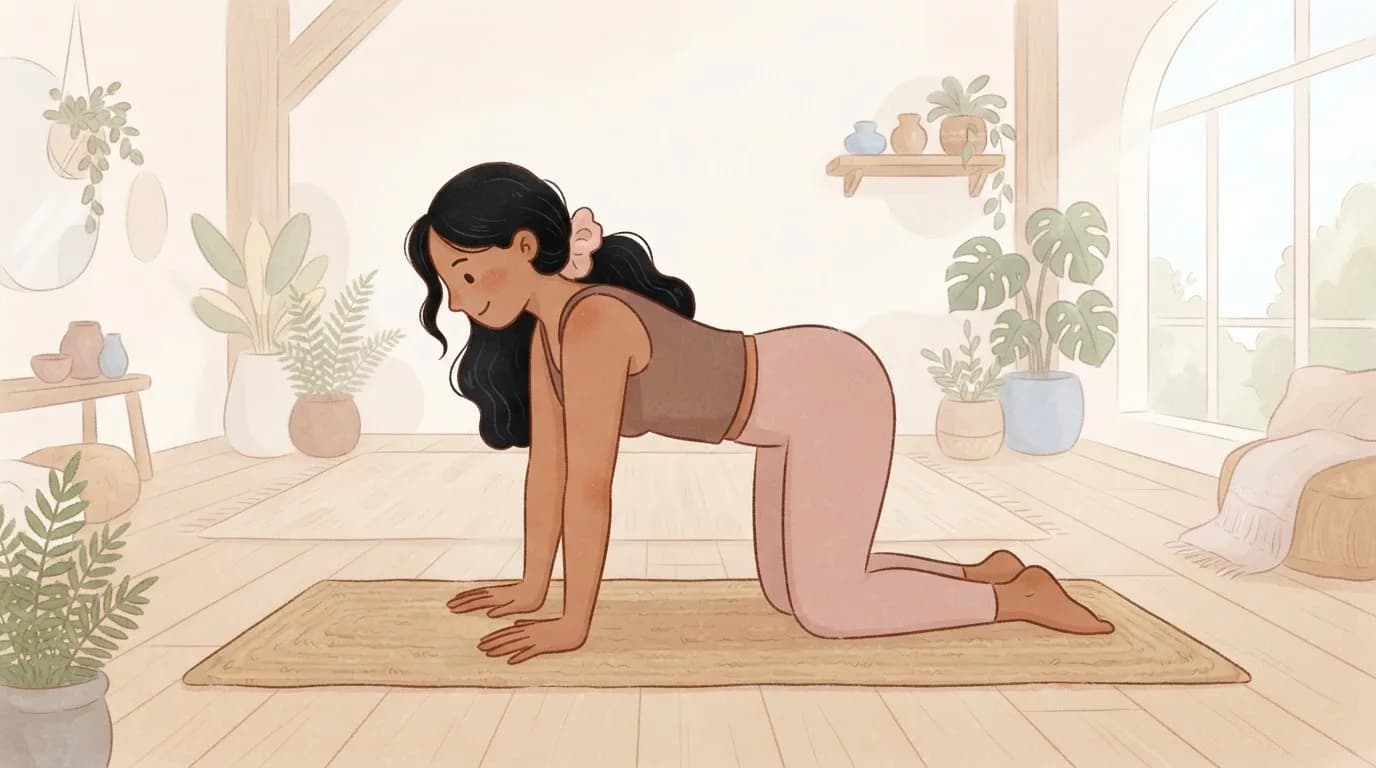
Tabletop looks easy, but your wrists sit at a full right angle with a lot of your weight on them, so the same hand set-up applies. Stack your shoulders over your wrists and let your knees take their share.
In side plank, everything goes through one hand, so keep the standing hand slightly forward of your shoulder, spread the fingers and press firmly through the index finger side. Lowering the bottom knee is a great way to practise it with less load.
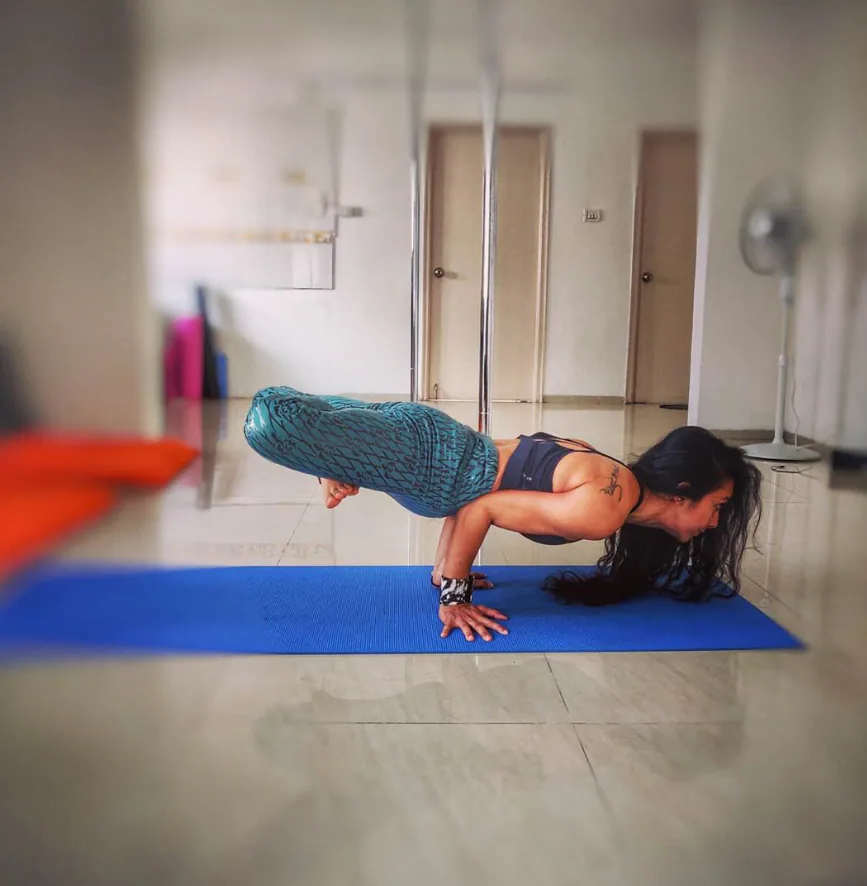
Arm balances like crow ask the most of your wrists, which is why it's worth building up to them gradually. If handstands are part of your practice, we wrote a whole separate guide to handstand wrist pain and how to train around it.
Which props help with wrist pain in yoga?
Props are there to change the angle of your wrist or to take the wrist out of the pose completely, and none of them are a sign that you're doing yoga wrong. The table below compares the common options.
| Prop or option | What it does | Good for | Watch out for |
|---|---|---|---|
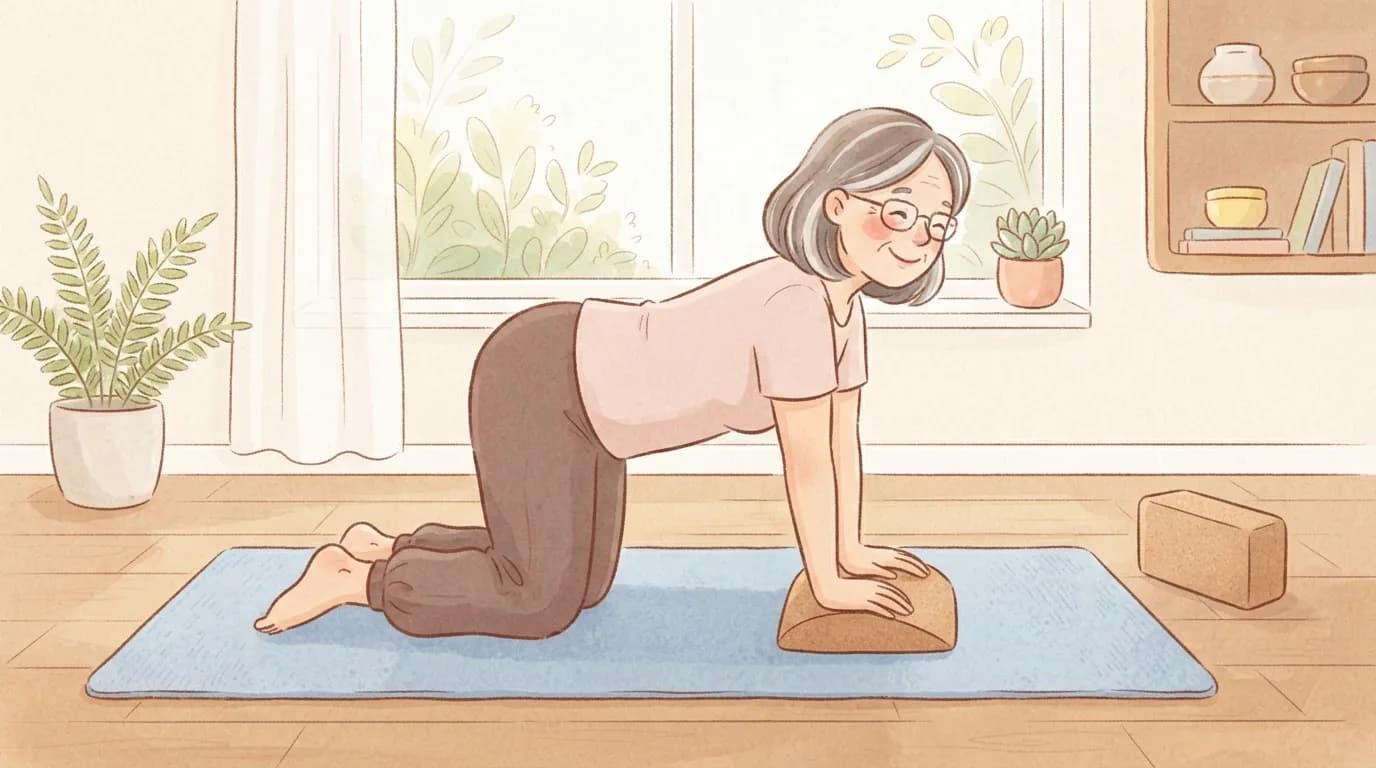
| Yoga wedge | Lifts the heel of the hand so the wrist bends back less | Down dog, plank, tabletop, upward dog | Takes a little getting used to, and you need to carry it around |
| Folded edge of your mat | A homemade version of a wedge under the heels of your hands | Trying the idea before you buy anything | Can slide, and a thick fold is unstable |
| Firm yoga blocks | Raise the floor so you lean less and can grip the edge | Plank, low lunges, standing poses where the hands reach down | Soft foam blocks let the hand sink, which can make the angle worse |
| Fists | Keep the wrist straight and put the weight on your knuckles | Tabletop, plank, knees-down push-ups | Harder to balance and hard on the knuckles on a thin mat |
| Forearms | Take the wrists out of the pose completely | Dolphin instead of down dog, forearm plank instead of plank | More load on the shoulders, so go easy if they are tired |
| Elastic wrist wraps | Add compression and warmth and help the wrist feel more stable | Longer flows, arm balances, wrists that feel tired or wobbly | They don't change the angle, so use them together with a good set-up |
If you're weighing up wraps, braces and props in more detail, our guide to the best wrist support for yoga goes through what each one is good for and what to look for.
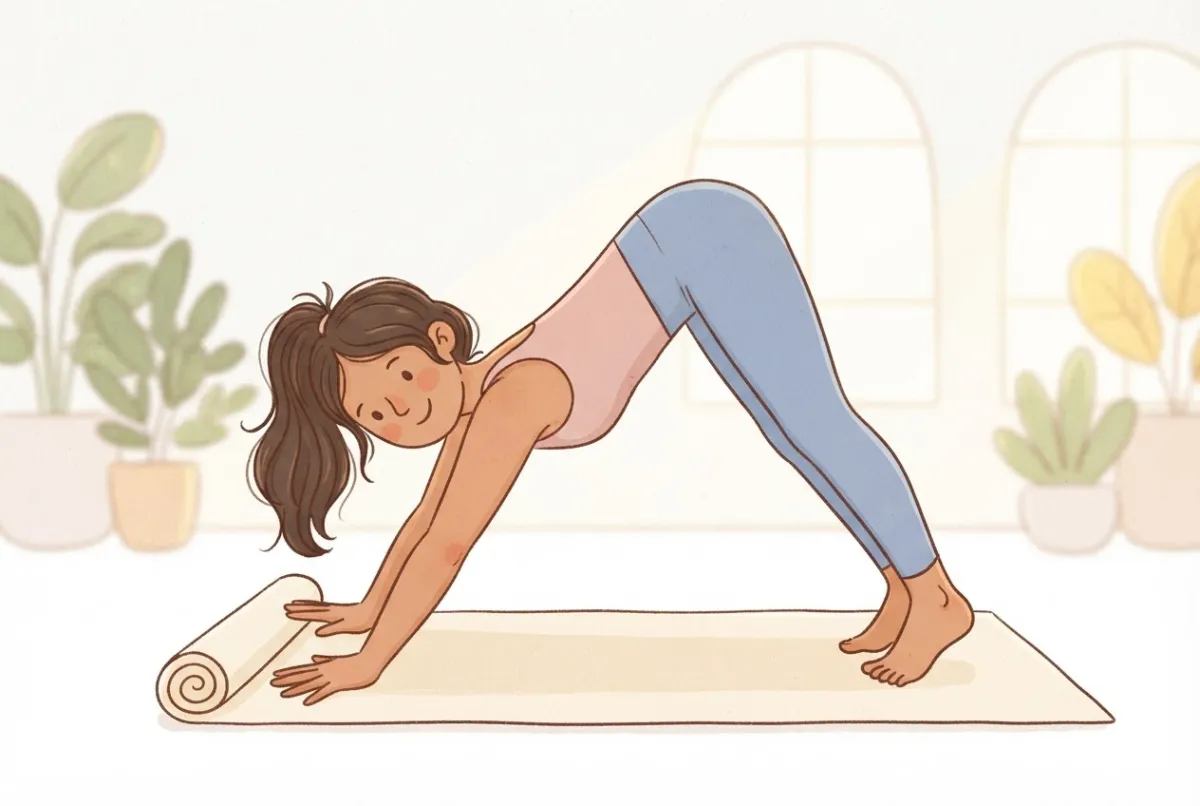
Masha's tip: Before you buy a wedge, try rolling the front edge of your mat once or twice and putting the heels of your hands on it during down dog. If your wrists feel noticeably happier, you know the angle is your issue and a wedge is worth it.
Does your yoga mat make wrist pain worse?
A thick, soft mat feels lovely under your knees, but your hands sink into it, which bends the wrists further back and makes them work harder to stay stable. A firmer mat around 4 to 6 mm thick gives most people a good balance. If you love your soft mat, fold a towel under your knees on a thinner one instead, or put a firm block or wedge under your hands for the weight-bearing parts of class.
Grip matters too. If your hands slide, your forearms and wrists tense up to hold you in place, so a sticky mat or a yoga towel on sweaty days helps more than people expect.
Where do wrist wraps fit in?
I made SneakyDeez for pole, after teaching every day with sore wrists, and a lot of yogis wear them for the same reason. They give firm elastic compression around the joint and sit low on the wrist, so your fingers and palm stay completely free to press into the mat and your wrist can still bend into down dog. That combination of warmth, a snug hug and a reminder to keep your hands active is what people like about them. They won't fix a set-up where all your weight is sinking into the heel of your hand, so think of them as a partner to everything above.
When is wrist pain in yoga more than a set-up problem?
If you've changed your hand position, tried props and eased off and your wrist still hurts, it's time to look at what kind of pain it is. Pain on the pinky side, the thumb side or the top of the wrist can mean different things, and tingling in the fingers is different again, so our guide to the different types of wrist pain in yoga will help you work out what you're dealing with.
The NHS advises seeing a GP if wrist pain stops you doing normal things, keeps coming back, or hasn't improved after two weeks of looking after it at home, and getting urgent help after a fall or if your wrist looks misshapen or you can't move it (NHS: Wrist pain). A physiotherapist who works with active people can also look at your hands in the actual poses, which is often where the answer is.
Everything in this guide
- Types of Wrist Pain in Yoga: What Your Pain Is Telling You, Plus 6 Tips for ReliefWhere your wrist hurts says a lot about why. Learn to tell the common types of yoga wrist pain apart, what tends to help each one, and when it's time to get it checked.
- Wrist Pain from Handstands: Why It Happens and How to Train Around ItHandstands put your whole body weight on a joint bent back to ninety degrees, so your wrists need a bit of help. Learn how to set up your hands, condition your wrists and build up at a pace they can handle.
- Best Yoga Wrist Support: Wraps, Braces or Props?Wedges, blocks, wraps and braces all promise happier wrists on the mat, but they solve different problems, so this guide helps you pick the right one for your practice.
- Yoga Wrist Pain Remedies: What to Do When Your Wrist Already HurtsYour wrist already hurts after yoga, so what now? This guide covers how to calm it down in the first few days, keep practising without making it worse, and ease back into your full flow.
- Tips to Prevent Wrist Pain in Yoga: Warm-Up, Sequencing and When to Back OffMost yoga wrist pain builds up quietly over weeks. These are the habits around your practice that keep it from starting: a quick warm-up, smarter sequencing and knowing when to ease off.
Questions people ask
Why do my wrists hurt in downward dog but not in other poses?
Downward dog holds the wrists bent back with a lot of your weight on them, often for several breaths at a time. If your hips aren't sending back and your shoulders aren't working, even more of the weight goes into your hands. Bend your knees, push your hips back and press through the knuckles, and see if it eases.
Is it better to do yoga on fists if my wrists hurt?
Fists keep the wrist straight, so they can be a useful swap in tabletop, plank and knees-down push-ups. They're harder to balance on and can be uncomfortable on the knuckles, so a folded mat or towel underneath helps. A wedge is a good middle ground if fists feel unstable.
Should my hands be under my shoulders in plank?
In a standard plank, your shoulders sit roughly over your wrists. If your shoulders drift far forward of your hands, the wrists bend back more and take more load, so check your position in a mirror or ask your teacher to look.
Can a thick yoga mat cause wrist pain?
It can contribute. Your hands sink into a very soft mat, which increases how far the wrist bends back and makes it work harder to keep you stable. Many people find a firmer mat of around 4 to 6 mm more comfortable for weight-bearing poses.
Do I need to skip chaturanga if my wrists are sore?
Not necessarily. Lowering with your knees on the mat, keeping your elbows over your wrists and not lunging forward all reduce the load. If it still hurts, skip the vinyasa and go straight to child's pose or down dog, and get the pain checked if it doesn't settle.
Shop the fix
Wraps made for exactly this
Handmade in Slovenia by a pole teacher, with firm compression that sits low on the wrist.
Sources we checked
Written by
Masha Pinner
Pole dance teacher at Pandora Art of Pole in Slovenia and former fashion designer. Masha started SneakyDeez in 2017 after years of teaching on sore wrists, and she still designs every pair.
Read Masha’s story