The short version
- A flat-palm push-up bends the wrist close to 90 degrees, more than the comfortable range many people have.
- A standard push-up puts about 64% of your body mass through your hands, against roughly 49% from the knees.
- Fists, push-up handles and hex dumbbells keep the wrist straight, while incline push-ups reduce the load.
- Building up gradually over several weeks, with a short warm-up and forearm work, helps most people return to flat-palm push-ups.
- Sharp pain, swelling, night pain, or tingling and numbness in the fingers should be checked by a GP or physio.
Push-ups hurt the wrists mainly because a flat-palm push-up bends your wrist back close to 90 degrees while it holds up well over half your bodyweight. Many people simply don't have that much comfortable extension yet, especially after years of typing and phone use. You can usually keep doing push-ups by taking some of the bend or the load away, with fists, handles or an incline, while you build your wrists up to the full version.
This guide is about the why and the how of building tolerance. If you'd rather go straight to a checklist of form errors, I've written up the push-up mistakes that hurt your wrists separately.
Why do push-ups hurt my wrists?
The angle is bigger than people realise
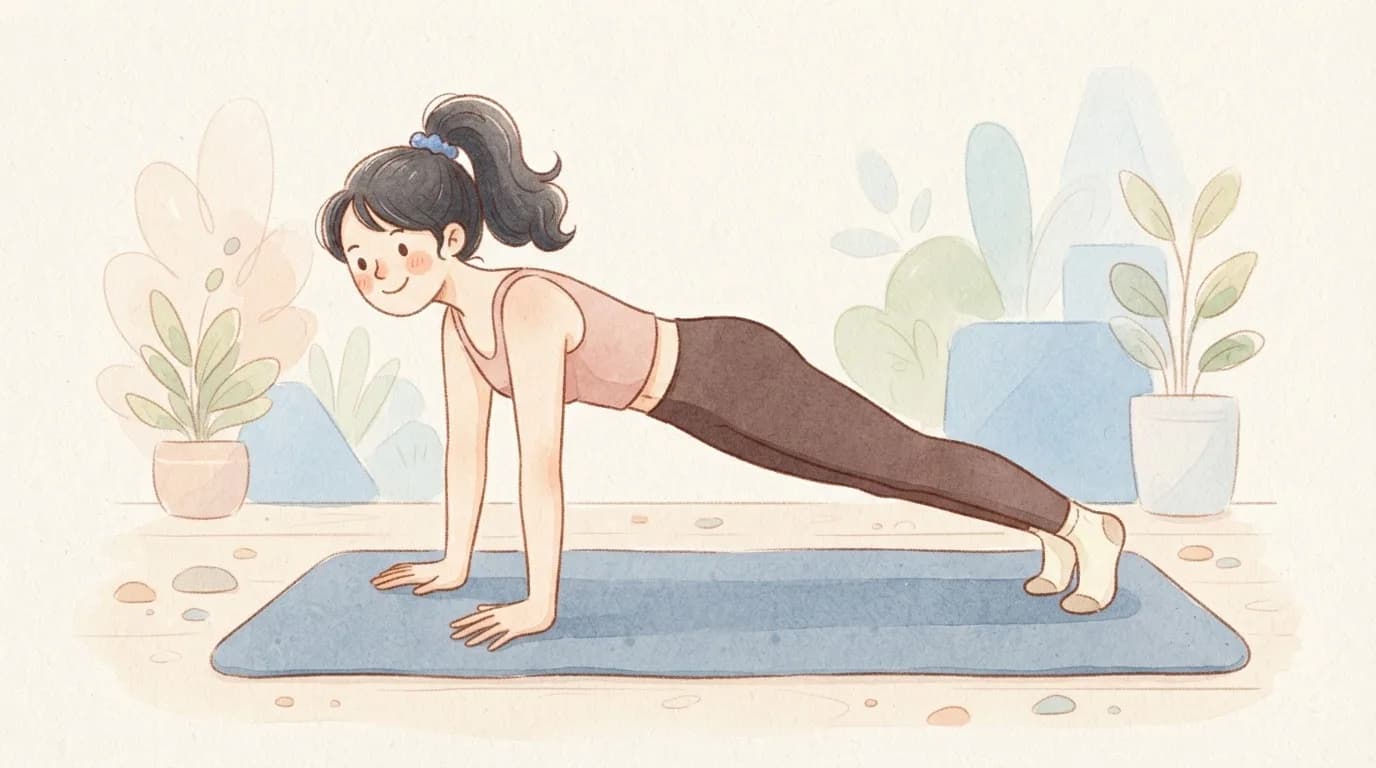
With your hand flat on the floor and your shoulder above it, your wrist is bent back a long way. Physiopedia gives a normal wrist extension range of roughly 0 to 70 degrees, and a flat push-up asks for something close to 90 at the start. If your wrists are stiff, the push-up takes them right to the end of their range and keeps them there, which is where they tend to feel pinchy and sore.
The load is bigger too
In a force-plate study by Ebben and colleagues, a standard push-up loaded the hands with about 64% of body mass, compared with roughly 49% from the knees and around 40% with the hands raised on a 60 cm box. So a set of 20 push-ups adds up to a lot of weight going through a bent wrist.
Your wrists aren't used to it
Most of us spend the day with wrists bent the other way, curled round a phone, a mouse or a steering wheel. If you suddenly add daily push-up challenges or a new class, the joints and tendons haven't had time to adapt, and overuse aches like wrist tendonitis can follow when volume jumps.
Small form details add up
Hands too far forward, weight dumped into the heel of the hand or hips sagging all change how the load lands on your wrist. The mistakes checklist covers each of these with fixes.
Is it normal wrist ache, or something to get checked?
A stiff, tired feeling in the wrists and forearms after a lot of push-ups, which settles within a day, is usually your body adapting to something new. A pinch at the back of the wrist that goes away when you change hand position is usually about the angle, and the variations below should help.
It's different if you have sharp pain in one spot, swelling, pain that's still there the next morning and getting worse each week, pain at night, clicking with pain, or tingling and numbness in your fingers. The NHS advice on wrist pain is to see a GP if it hasn't improved after two weeks of home care, or straight away if there's numbness or tingling, and to get urgent help after a fall with swelling or a change in shape.
Which push-up variations are easier on the wrists?
You can change two things: how far the wrist bends, and how much weight goes through it. This table shows how the common options compare.
| Variation | Wrist bend | Load on hands | Good for |
|---|---|---|---|
| Standard flat-palm push-up | Close to 90 degrees | About 64% of body mass | The goal, once your wrists can handle it |
| Incline push-up (hands on a bench or box) | A little less, depending on height | Roughly 40% to 55%, depending on height | Building tolerance with a flat hand |
| Push-up from the knees | Close to 90 degrees | About 49% of body mass | Reducing load while keeping the hand flat |
| Push-up handles or hex dumbbells | Wrist straight | Same as a standard push-up | Training hard while the wrist settles |
| Fist push-up | Wrist straight | Same as a standard push-up | No equipment, neutral wrist |
| Wall push-up | Mild | Very low | Beginners or a gentle restart after a sore patch |
Load figures come from the Ebben study above and are averages, so your own numbers will vary a bit.
Fists and handles
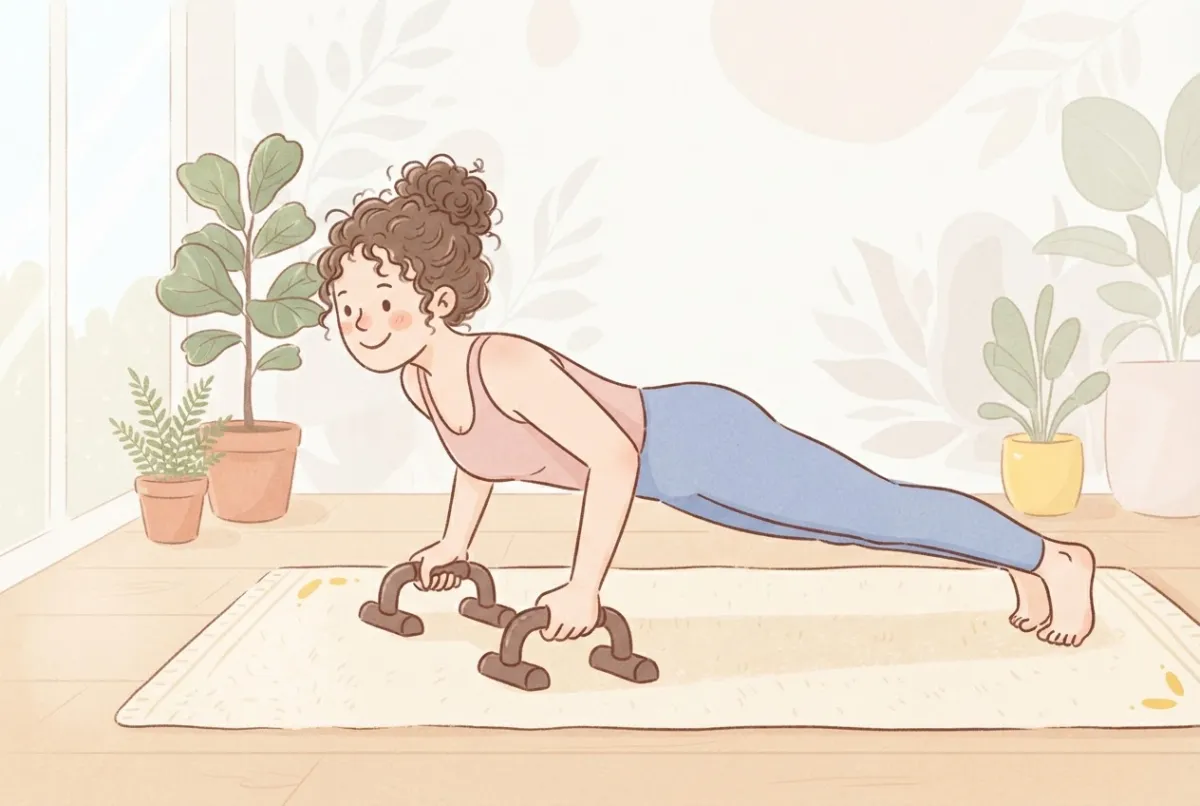
Both keep your wrist straight, like holding a hammer, so the bend that causes most push-up wrist pain simply isn't there. For fist push-ups, put a folded towel or mat under your knuckles and keep the weight over your first two knuckles with your wrist dead straight. With handles or hex dumbbells, grip firmly so the wrist doesn't wobble, and pick a pair that won't roll.
Incline push-ups
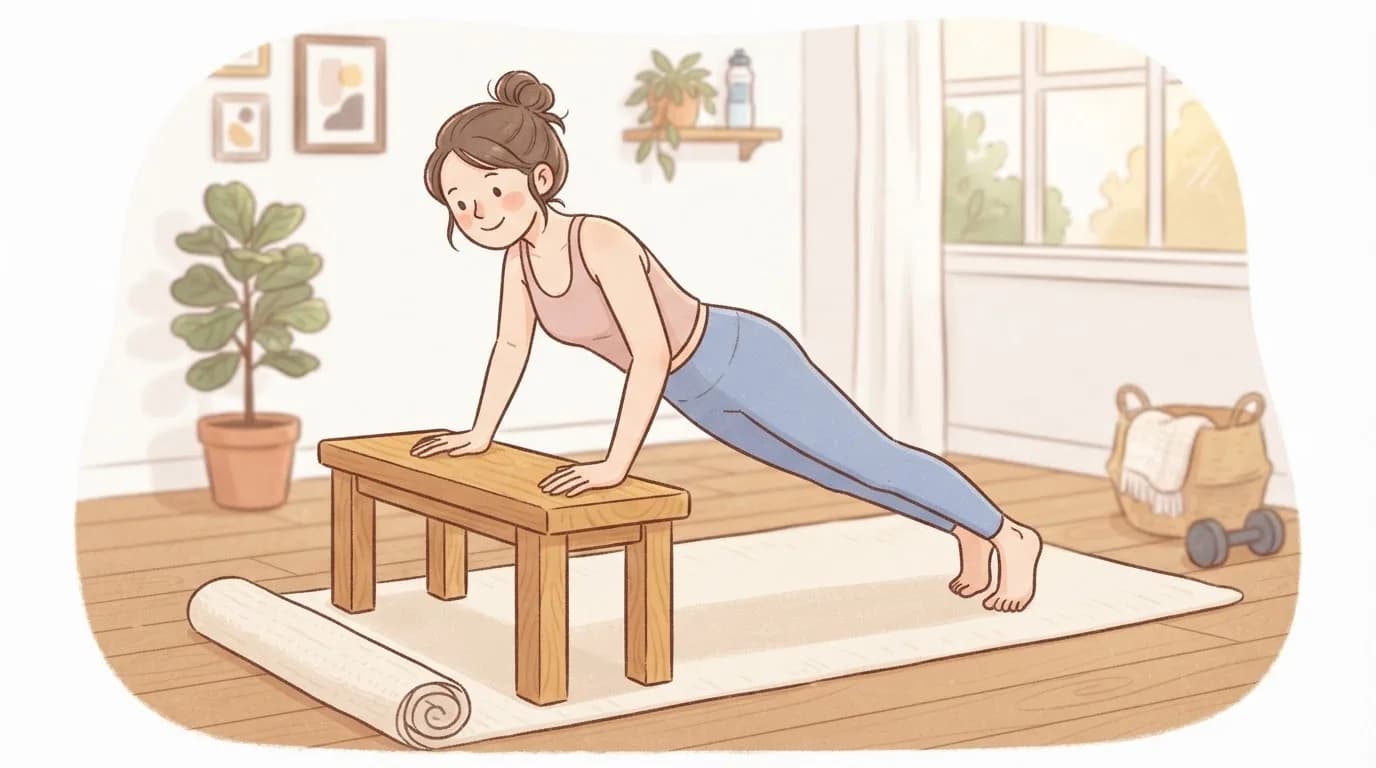
Putting your hands on a bench, a box or the edge of a sturdy table reduces the load and keeps a flat palm, so they're the best bridge back to normal push-ups. The higher the surface, the easier it is, and you can lower it over the weeks.
How do you build your wrists up to flat-palm push-ups?
If flat push-ups hurt now but you'd like to do them comfortably, a gradual plan works well. Do this two or three times a week, and only move on when the current step feels easy for a full week. It should feel like effort and a mild stretch, never sharp pain.
- Weeks 1 to 2: do your main push-up sets on handles or fists, plus 2 sets of 10 slow wrist rocks on all fours, shifting your weight gently forward over flat hands and back.
- Weeks 3 to 4: add 2 to 3 sets of 8 to 12 flat-palm incline push-ups with hands on a bench, before your main sets on handles.
- Weeks 5 to 6: lower the incline to a step or low box, and add 2 sets of 20 to 30 second plank holds on flat hands.
- Weeks 7 to 8: try 2 to 3 sets of 5 to 8 flat-palm push-ups on the floor, finishing your volume on handles.
- From then on: gradually swap more of your sets to flat palms, keeping handles for high-volume days.
Twice-weekly forearm work speeds things up, and you'll find a simple routine in my guide to building stronger wrists.
What's a good wrist warm-up before push-ups?
Two or three minutes is plenty, and it makes a noticeable difference, especially if you've been at a desk all day.
- Wrist circles: 10 slow circles each direction, fingers loosely interlaced or hands free.
- Prayer and reverse prayer: hold each for 15 to 20 seconds, as a gentle stretch only.
- Wrist rocks on all fours: 10 slow rocks forward and back with hands flat, then 10 with fingers turned out to the sides.
- Fist to spread fingers: 10 reps, squeezing hard and then spreading the fingers wide.
- Easy push-ups: 5 incline push-ups before your first real set.
The same routine works before handstands and pole, and there's a longer version in my wrist warm-up guide.
Masha's tip: If push-ups only hurt in the first set and feel fine after that, your wrists are probably just stiff. Give the warm-up a fair go for two weeks before you change anything else.
Do wrist wraps help with push-ups?
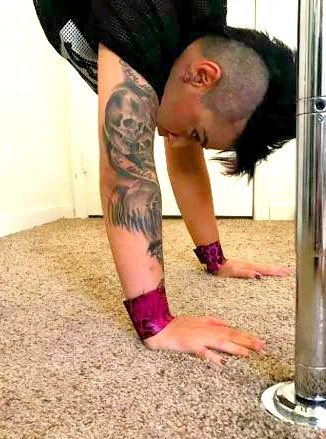
A wrap won't change the angle of your wrist much, so it's not a replacement for the variations above. What it does give is firm compression and a bit of resistance as the wrist bends back, and many people find push-ups and planks feel more comfortable and stable with one on, especially in long classes or when building up volume. It's a good support while you build tolerance, and you can wear one with handles or flat palms.
Our wraps were made for exactly this kind of load, because pole and handstands put body weight through a bent wrist all the time. They sit low on the wrist so your hand can still spread on the floor.
If you're also pressing in the gym, my guide on wrist pain on the bench press covers the barbell side of things, and wrist pain in handstands covers the upside-down version.
More in Strength training
- How to Strengthen Your Wrists: A Progressive 8-Week Plan
- Wrist Pain When Bench Pressing: Causes, Grip Fixes and What Helps
- Wrist Support at the Gym: When to Wear It, How Tight and How Long
- Wrist Wraps for Lifting Weights: Presses, Front Rack and Overhead
- Best Wrist Support for the Gym: Wraps, Straps, Sleeves or Braces?
- 7 Push-Up Mistakes That Hurt Your Wrists and How to Fix Each One
- Exercises to Prevent Wrist Injuries: A 7-Minute Warm-Up and Prehab Routine
Questions people ask
Are knuckle push-ups better for your wrists?
For many people, yes, because pushing up on your fists keeps the wrist straight instead of bent back. Use a mat or folded towel under your knuckles and keep your weight over the first two knuckles.
Should I stop doing push-ups if my wrists hurt?
Not always. If it's a mild ache, switch to handles, fists or incline push-ups and see whether that feels comfortable. If the pain is sharp, getting worse, or comes with swelling or tingling, stop and get it checked.
Why do my wrists hurt after push-ups but not during?
It often means the volume was more than your wrists are used to, so the joints and tendons are sore as they adapt. Cut the number of sets for a while, use a warm-up, and build up again gradually.
How long does it take for wrists to get used to push-ups?
It varies, but many people notice a real difference after several weeks of gradual practice two or three times a week. Pushing the timeline by adding lots of volume quickly tends to cause more soreness.
Are push-up bars good for wrist pain?
Yes, they're one of the simplest fixes, because holding the handles keeps your wrist in a straight, neutral position. Choose bars that are stable and don't roll.
Shop the fix
Wraps made for exactly this
Handmade in Slovenia by a pole teacher, with firm compression that sits low on the wrist.
Sources we checked
Written by
Masha Pinner
Pole dance teacher at Pandora Art of Pole in Slovenia and former fashion designer. Masha started SneakyDeez in 2017 after years of teaching on sore wrists, and she still designs every pair.
Read Masha’s story