The short version
- A 7-minute warm-up of wrist circles, fist pumps, floor rocks, palm lifts and plank shifts prepares your wrists for load.
- Finish with a 3-minute prehab set of band extensions, finger openers and gentle forearm stretches while you're still warm.
- No warm-up removes all risk, but building up gradually and noticing early aches makes a big difference.
- Adjust the routine to your sport, for example more grip work for pole and more bent-back wrist loading for handstands.
- Pain after a fall, numbness, night pain or weakness means stop and get checked.
The most useful exercises for looking after your wrists are a short warm-up before you put weight or grip through them, and a couple of minutes of prehab afterwards. A 7-minute routine of wrist circles, fist pumps, floor rocks, palm lifts and plank shifts gets blood into the forearms and gradually gets the joint used to load, which makes a hard session much kinder on your wrists.
No routine can promise you'll never get hurt, but going from cold wrists straight into handstands, push-ups or a pole invert is one of the most common things I see in class, and it's an easy one to fix. This is the quick routine. For building real strength over weeks and months, follow our progressive wrist strengthening plan as well.
Why do wrists get injured in training?
There are two main ways. The first is a sudden one: falling onto an outstretched hand, landing badly from a jump or a trick, or a twist under load. The second is slower and much more common in dance, yoga and the gym, where you do more than your wrists are ready for, usually lots of weight-bearing with the wrist bent back, or long sessions of tight gripping, and the tendons and joint get irritated over time.
A warm-up can't stop you falling, but it can help with the second kind by getting your tissues warm and ready, and by letting you notice early if something feels off before you load it hard. Structured warm-ups have good evidence in some sports: a systematic review of the FIFA 11+ warm-up programme found teams using it had fewer injuries overall. That research is in football rather than wrists specifically, but the principle of preparing the body for what you're about to ask of it carries over nicely.
The 7-minute wrist warm-up (before training)
Do this on a mat or carpet. Everything should feel easy to moderate, never painful, and you should finish feeling warm and loose rather than tired.
- Get warm (1 minute). Big arm swings, shoulder circles and a good shake of the hands. Rub your forearms briskly if the room is cold.
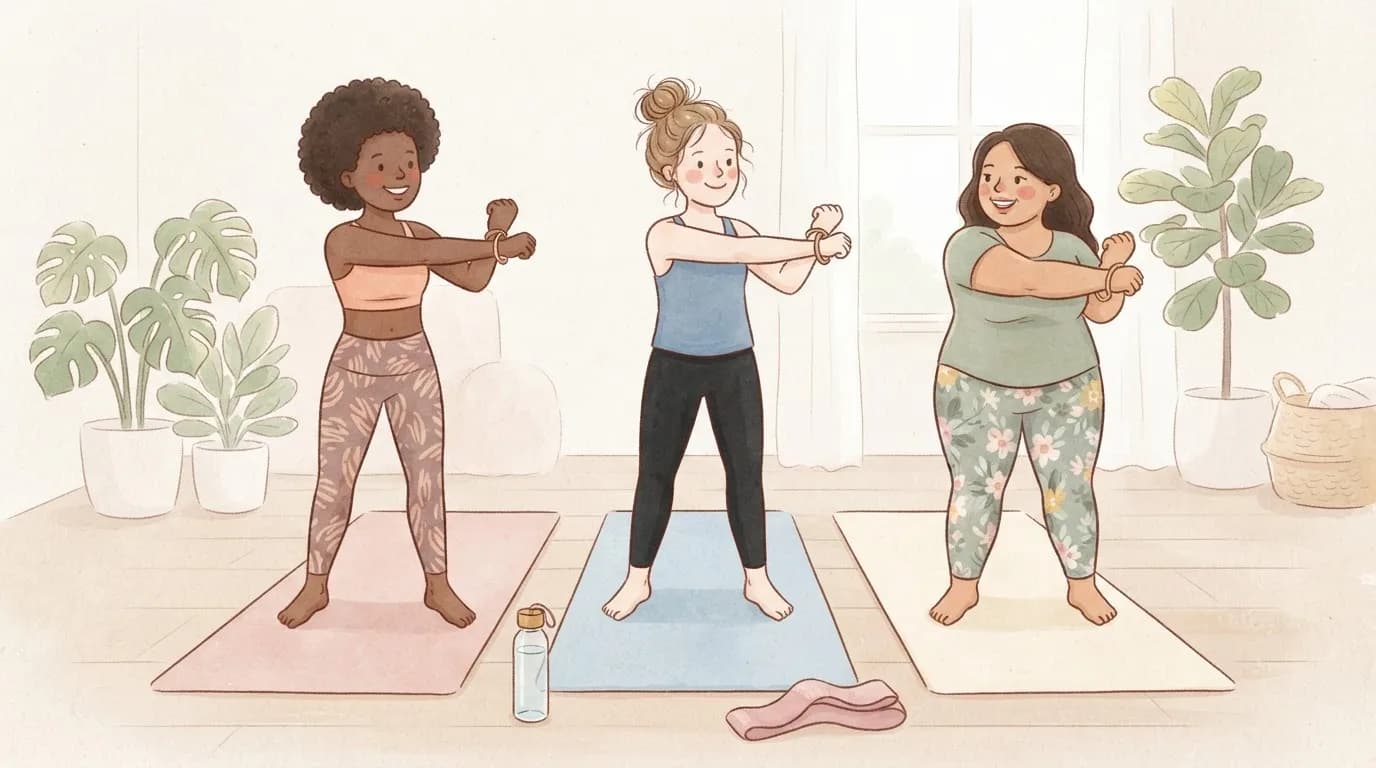
- Wrist circles and finger waves (45 seconds). Interlace your fingers loosely and roll the wrists in circles both ways, then let go and ripple your fingers open and closed like a wave.
- Fist-to-spread pumps (30 seconds). Squeeze a firm fist, then spread your fingers as wide as they go. About 20 quick reps. You should feel your forearms warming up.
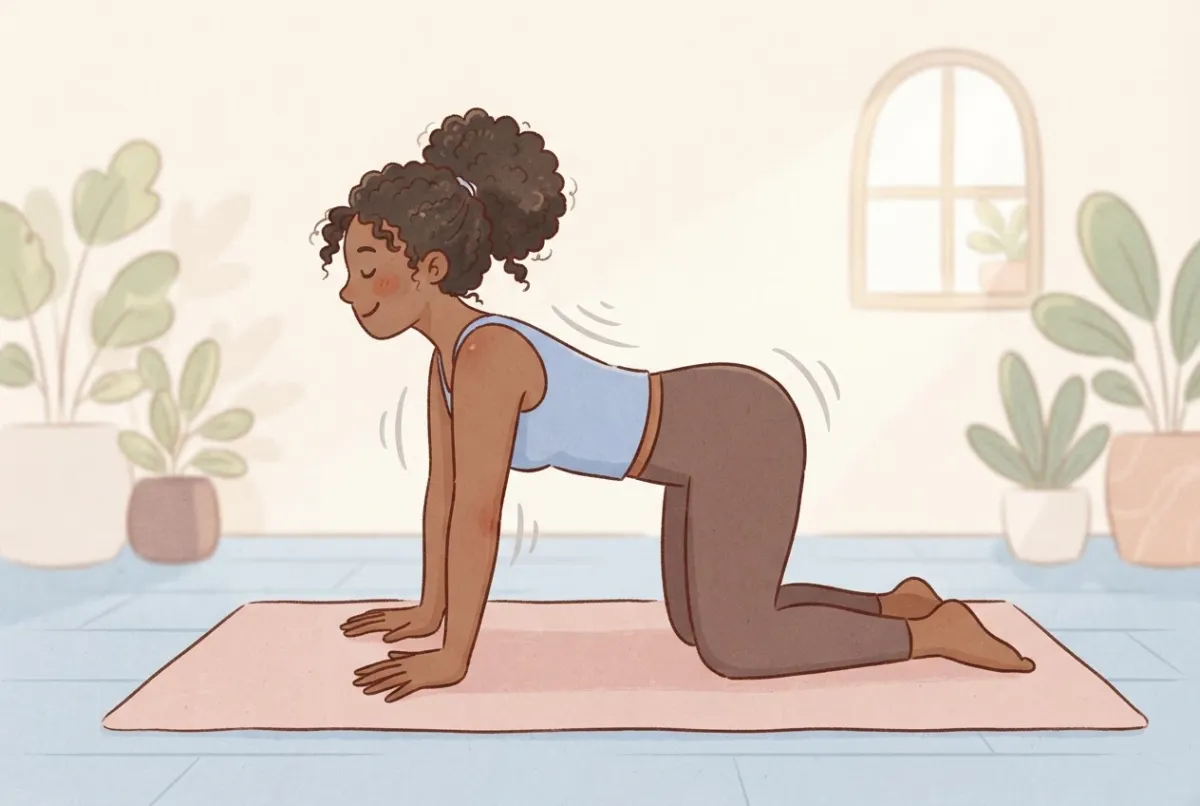
- Tabletop rocks (1 minute 30 seconds). On hands and knees, hands under shoulders, fingers forward. Slowly rock your weight forward over your hands and back, 10 times. Turn the fingers out to the sides and do 10 more. If it feels comfortable, finish with 5 gentle rocks on the backs of your hands, keeping most of your weight in your knees.
- Palm lifts (45 seconds). Back to fingers forward. Keep the fingertips pressing down and lift the heels of your hands off the floor, then lower slowly. 10 reps. This switches on the forearm muscles that help support the wrist under load.
- Elbow pit turns (45 seconds). Still on all fours, rotate your arms so the creases of your elbows face forward, then back to the middle, keeping your hands flat. 8 slow reps. It warms up the forearm rotation you use in so many grips.
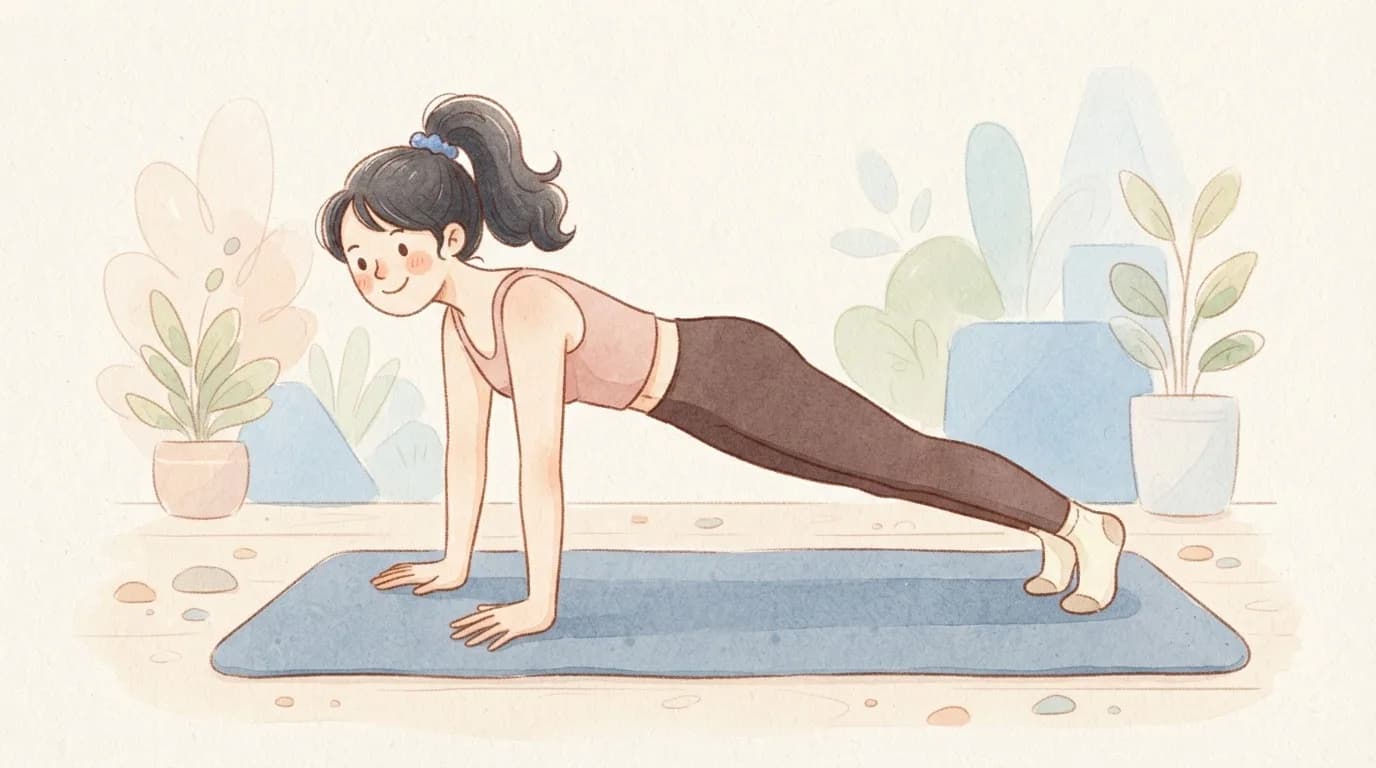
- Plank shifts (1 minute). In a high plank (or from your knees), shift your weight slowly forward over your hands, then back, then side to side. 20 seconds, rest, repeat twice. Spread your fingers and press through the finger pads, not just the heel of the hand.
- Ramp up (as long as you need). Start your session with the easiest version of what you're about to do: half push-ups, an empty bar, easy spins or a supported handstand kick-up, and build from there.
Masha's tip: if your wrists feel stiff or achy during the rocks, that's useful information. Keep the rest of your session lighter on the wrists that day and give them some extra time to warm up, rather than pushing through.
The 3-minute prehab finisher (after training)
After your session, while you're still warm, a few minutes of light strength and gentle stretching helps balance out the work you've just done. Keep it easy, because your forearms are already tired.
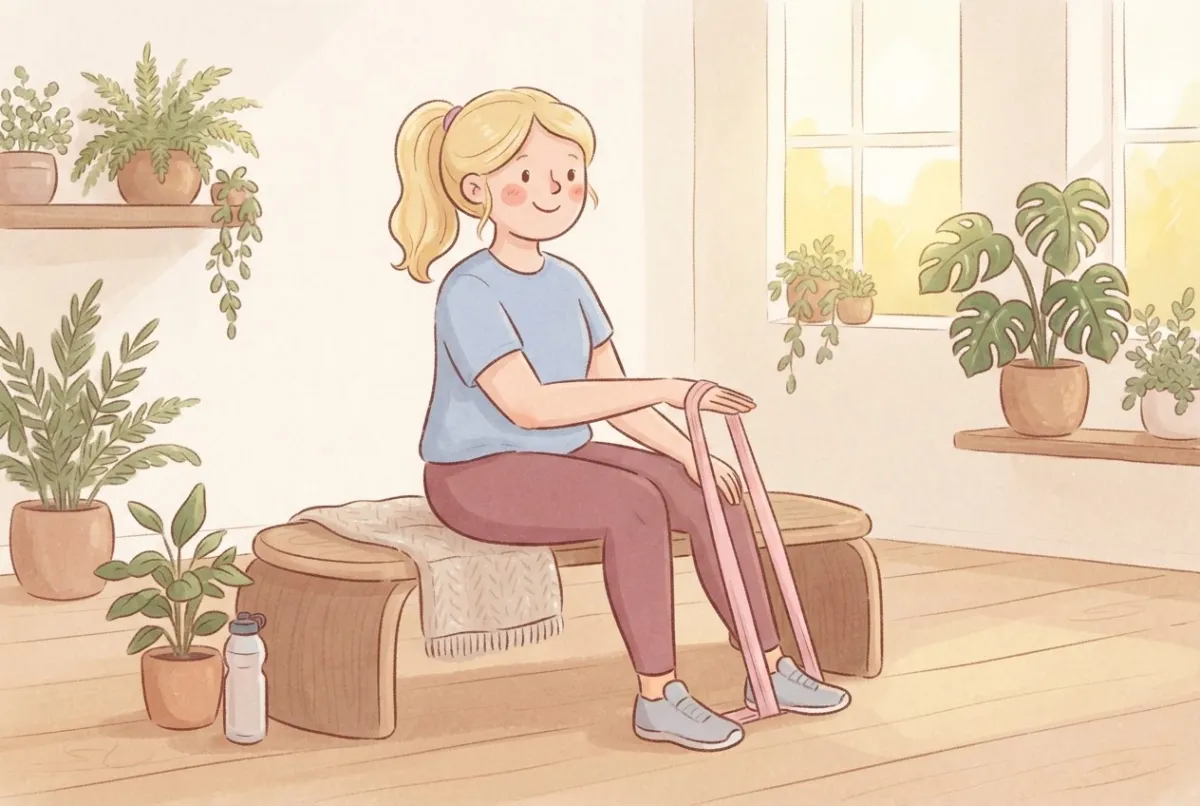
- Band wrist extensions: stand on a light resistance band or hold it with your other hand, palm down, and lift the back of the hand up, lowering slowly. 1 set of 15 on each side.
- Finger openers: loop a rubber band around your fingers and thumb and open them wide. 1 set of 20. Great after grip-heavy training like pole, bars or climbing.
- Gentle forearm stretches: arm straight in front, palm up, use the other hand to ease the fingers back for 20 to 30 seconds. Then turn the palm down and ease the hand towards you for 20 to 30 seconds. A mild stretch only, no pulling hard.
How should you adjust the routine for your sport?
| If you do | Add or focus on |
|---|---|
| Pole, aerial hoop or silks | Extra fist pumps and a few short grip holds on the apparatus before your first trick. Our pole and aerial wrist warm-up goes into detail. |
| Handstands, yoga or calisthenics | More time on tabletop rocks and plank shifts, building up the time on bent-back wrists gradually |
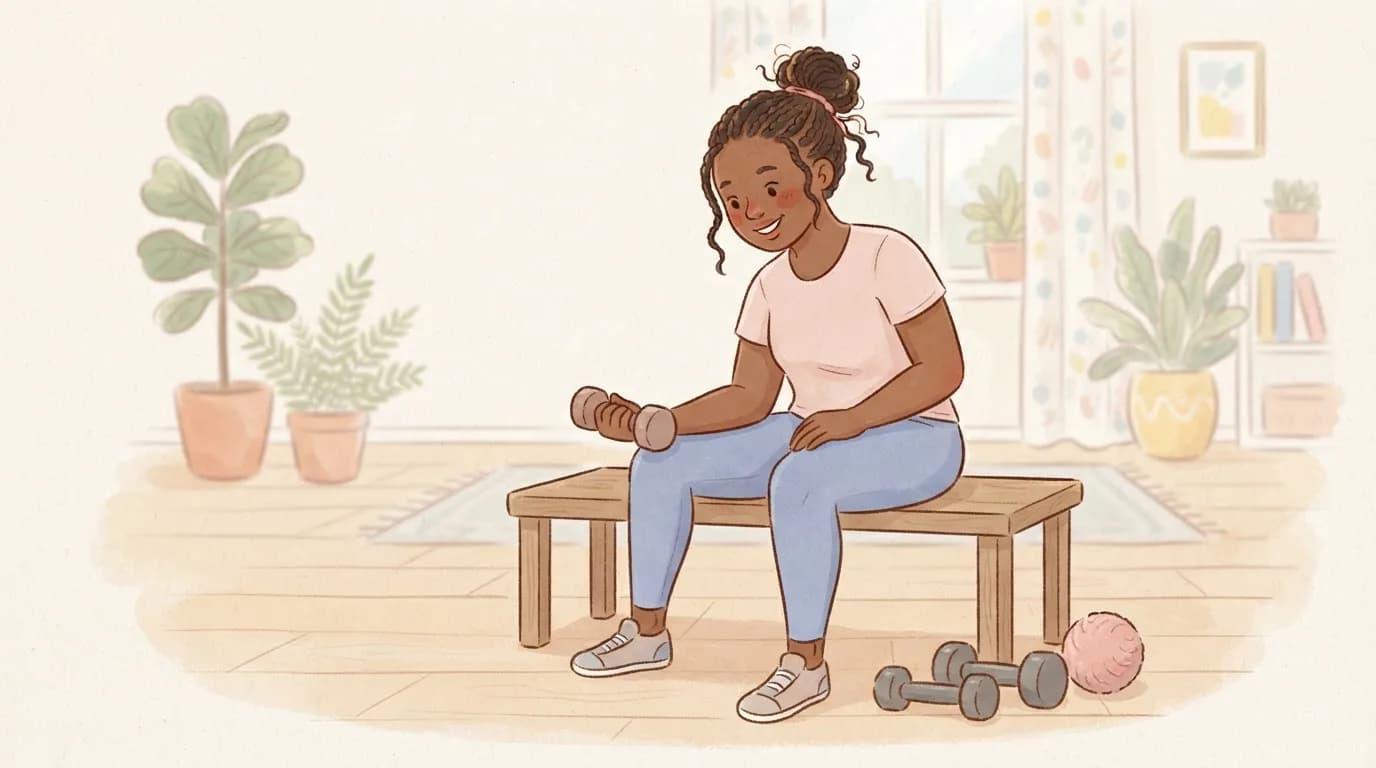
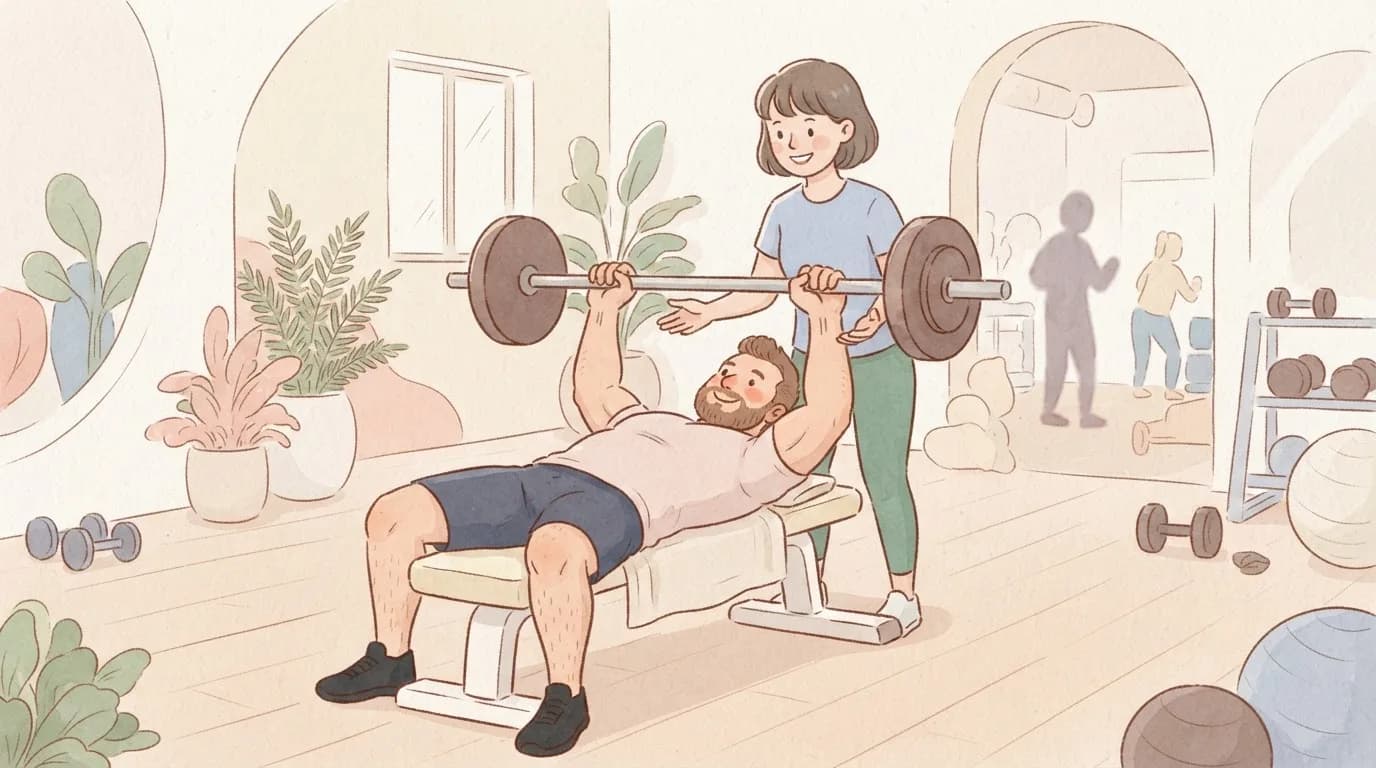
| Gym and weightlifting | A light warm-up set with an empty bar or light dumbbells, focusing on a straight wrist under the bar. If pressing is where it hurts, wrist pain when bench pressing covers grip and bar position. |
| Tennis, padel and other racket sports | Band wrist extensions and forearm rotations before you hit, then gentle rallying first |
| Boxing | Slow shadow boxing with a firm, straight wrist on each punch before you hit the bag |
What else helps keep your wrists healthy?
The warm-up is the quick win, but the bigger picture matters just as much:
- Build up slowly. Big jumps in training, like doubling your handstand practice or adding three new classes in a week, are a classic way to irritate wrists. Increase one thing at a time.
- Get stronger over time. Strong forearms and grip give your wrists a lot more margin. The progressive plan I mentioned at the start takes about 15 minutes, three times a week.
- Watch your hand position. Spreading your fingers and gripping the floor through the finger pads shares the load around the whole hand. If push-ups bother you, check out the push-up mistakes that strain your wrists.
- Listen to early warnings. A wrist that aches after every session is asking for a change of plan, and it's much quicker to sort out at that stage.
A lot of dancers also like wearing a firm compression wrap on heavy days, because it adds warmth and a snug, supported feeling and reminds you to keep your wrists aligned. That's why I started making SneakyDeez, as support that sits low on the wrist while leaving it free to move and grip. If you train with friends or a whole class, you can each pick your own pair through one shared group buy link and save together.
When should you stop and get your wrist checked?
Stop training the wrist and get advice if you have pain after a fall, swelling, pain that wakes you at night, numbness or tingling that doesn't go away, weakness when you grip, or pain that's still there after a couple of weeks of taking it easy. The NHS wrist pain page lists the signs that need urgent help, and our guide to wrist pain treatments explains what usually happens next. The Physiopedia sporting wrist page is also a good read if you want to understand how physios build wrists back up for sport.
More in Strength training
- How to Strengthen Your Wrists: A Progressive 8-Week Plan
- Wrist Pain When Bench Pressing: Causes, Grip Fixes and What Helps
- Wrist Pain From Push-Ups: Why It Happens and How to Build Tolerance
- Wrist Support at the Gym: When to Wear It, How Tight and How Long
- Wrist Wraps for Lifting Weights: Presses, Front Rack and Overhead
- Best Wrist Support for the Gym: Wraps, Straps, Sleeves or Braces?
- 7 Push-Up Mistakes That Hurt Your Wrists and How to Fix Each One
Questions people ask
How long should a wrist warm-up take?
Around 5 to 10 minutes is plenty for most sessions. The routine here takes about 7 minutes, then you ramp up with easy versions of your first exercises. On cold days or after a long break, give it a couple of extra minutes.
Should you stretch your wrists before or after a workout?
Before training, gentle movement and light loading tend to be more useful than long static stretches. Save the longer, gentle forearm stretches for after your session when you're warm.
What exercises are best for wrist pain prevention in yoga and handstands?
Tabletop rocks, palm lifts and plank shifts are especially useful because they gradually prepare your wrists for weight-bearing with the wrist bent back. Over the longer term, add wrist curls and grip work to build strength.
Can I do the warm-up if my wrist already hurts?
If it's a mild stiffness that eases as you move, gentle movement usually helps. If the warm-up itself is painful, or you have swelling, numbness or pain after a fall, skip the session and get it checked instead.
Shop the fix
Wraps made for exactly this
Handmade in Slovenia by a pole teacher, with firm compression that sits low on the wrist.
Sources we checked
Written by
Masha Pinner
Pole dance teacher at Pandora Art of Pole in Slovenia and former fashion designer. Masha started SneakyDeez in 2017 after years of teaching on sore wrists, and she still designs every pair.
Read Masha’s story