The short version
- Wrist rests are meant for the heel of your palm during pauses, so keep your hands floating while you type.
- Leaning on a rest while typing bends the wrist back and presses on the area where the tendons and median nerve pass through.
- Set the rest level with the front edge of the keyboard, choose one that is soft and rounded, and move the mouse from your elbow.
- Keyboard height, forearm support, a close mouse and frequent short breaks usually matter more than the rest itself.
- Numbness, tingling, weakness or night pain should be checked by a GP or physio.
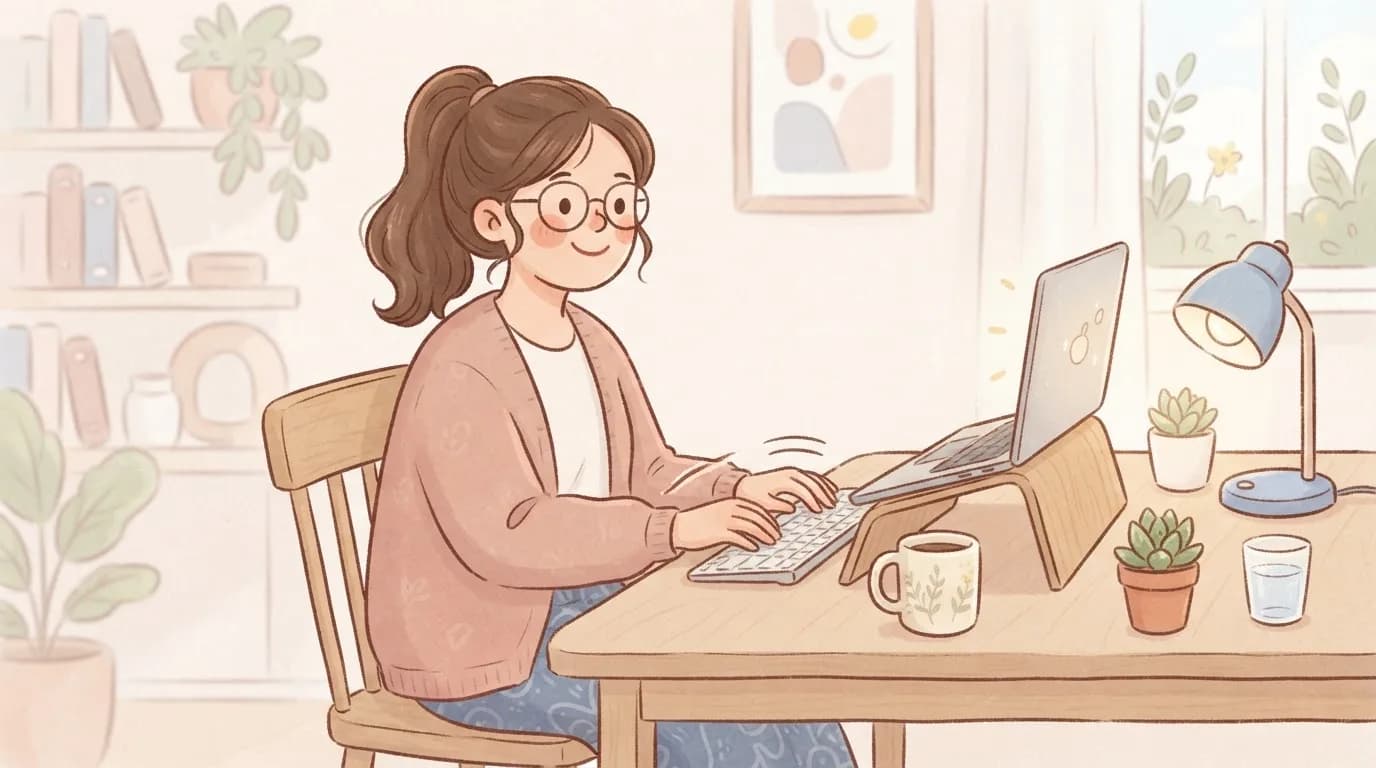
An ergonomic wrist rest often doesn't help because people lean on it while they type or use the mouse. That bends the wrist back and presses the soft underside of the wrist, where the tendons and the median nerve run through the carpal tunnel, into the pad thousands of times a day. Wrist rests are meant for the heel of your palm during pauses, so the fix is usually to float your hands while you work, set the rest at the right height and sort out the desk around it.
If you bought a squishy gel rest and your wrists feel the same or worse, you haven't done anything silly. It's one of the most common desk mistakes, and it's easy to put right.
Why isn't my wrist rest helping?
The name is a little misleading. In its guidance on wrist and palm supports, OSHA (the US workplace safety agency) says your hands should move freely and stay above the rest while you type, and that when you do rest, the pad should touch the heel or palm of your hand rather than your wrist. Most of us do the opposite. We plant the wrist on the pad and then type by bending the wrist up and moving the fingers from that fixed point.
That causes three problems:
- Pressure on the wrong spot. The underside of your wrist has very little padding, and the tendons and the median nerve pass through just underneath. Pressing it into a rest all day is direct pressure on a sensitive area.
- A bent-back wrist. With the wrist anchored, your hand has to tilt upwards to reach the keys. Holding the wrist bent back for long periods is one of the postures most linked to desk discomfort.
- Side-to-side wrist flicks. An anchored wrist means you reach for far keys, or move the mouse, by swivelling the wrist sideways instead of moving your whole forearm.
The mouse rest is often the worst offender. Gel mouse pads with a wrist bump encourage you to pivot the mouse with your wrist alone, which is a lot of small, repetitive side bends.
Signs your wrist rest is part of the problem
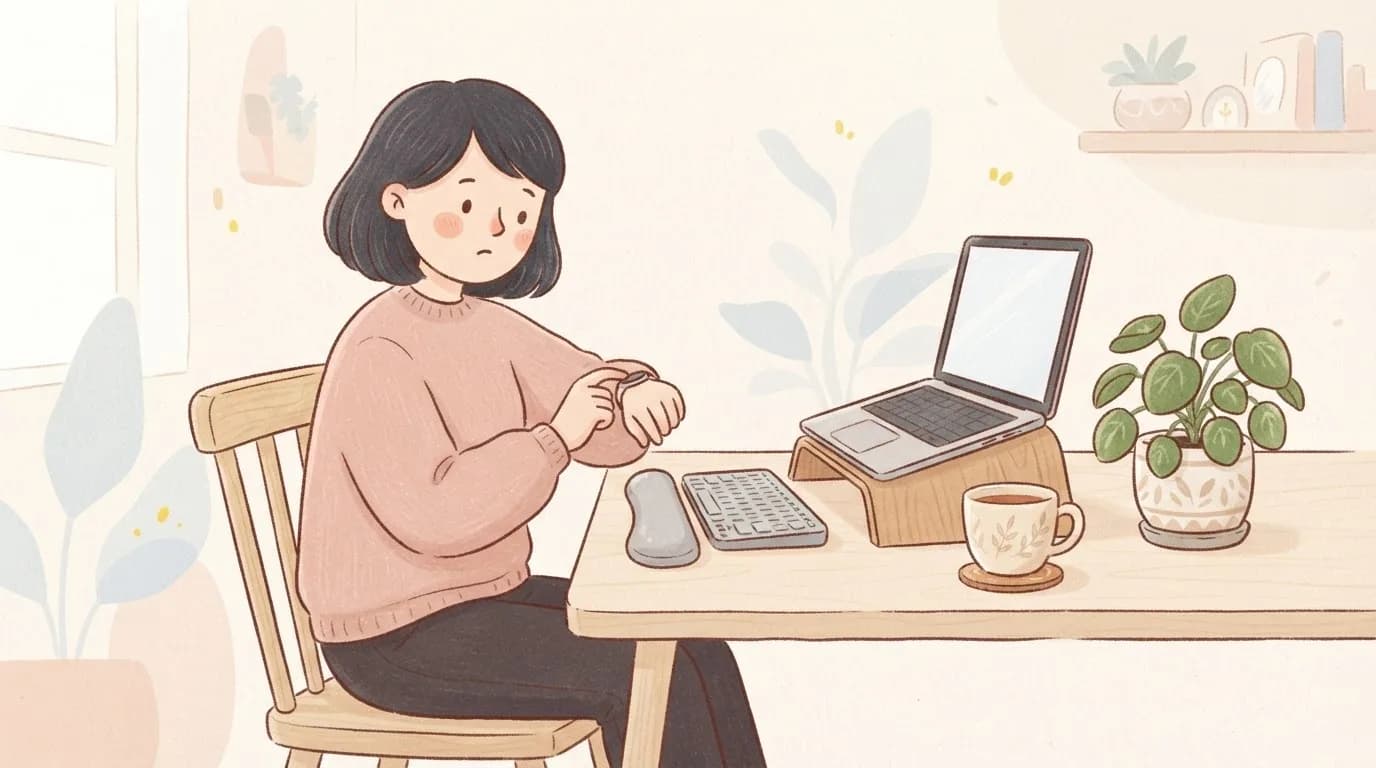
- You have a red line or dent across the underside of your wrist at the end of the day.
- Your wrists ache more on days when you've been mousing a lot.
- When you look down mid-sentence, your wrist is on the pad and your knuckles are higher than your wrist.
- Your fingers tingle after long typing sessions, especially the thumb, index and middle fingers.
- The pain eases at weekends and comes back on Monday.
Tingling and numbness are worth a chat with your GP whatever the cause. The NHS page on carpal tunnel syndrome explains the usual pattern and when to get help.
How to use a wrist rest the right way
You don't have to throw it away. Try these five changes for a week and notice how your wrists feel.
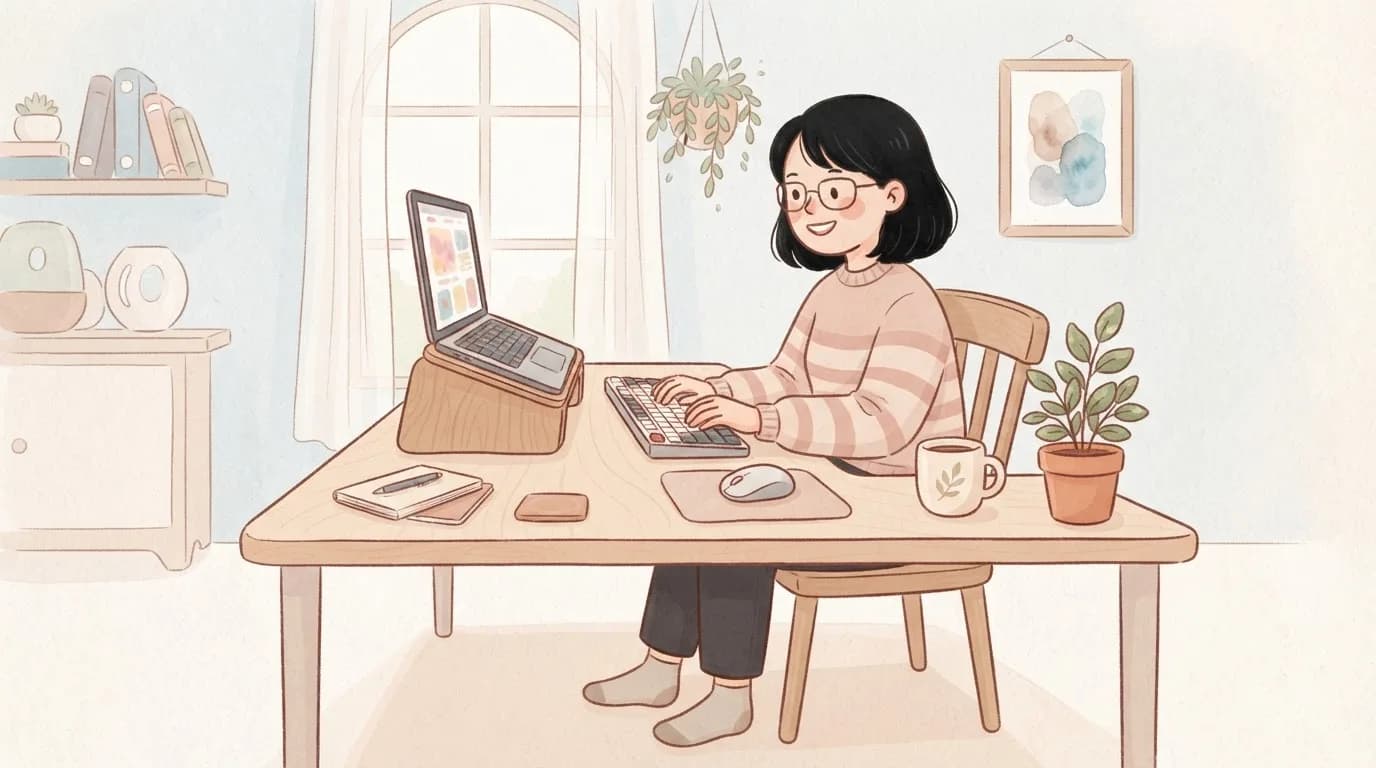
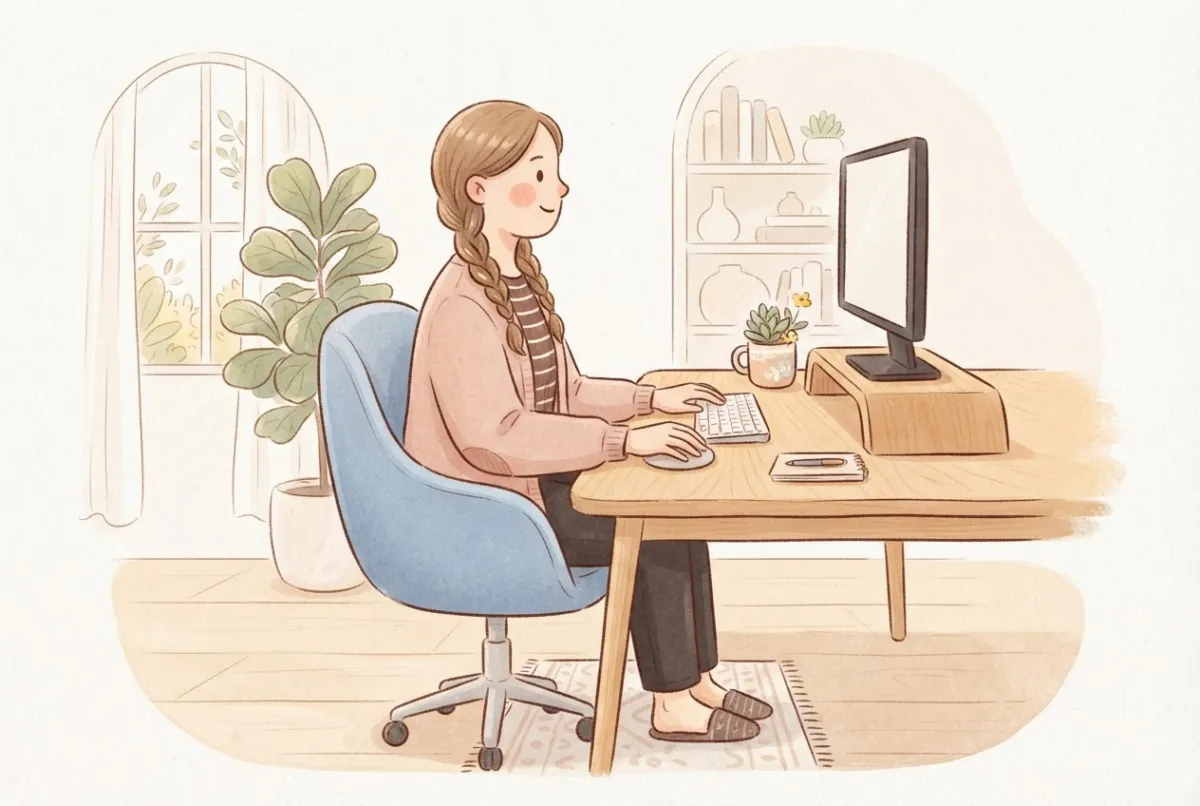
- Hover while you type. Keep your hands floating over the keys while you're actively typing, and lower the heel of your palm onto the rest only when you pause to read or think.
- Rest on your palm, not your wrist. Move the rest back a little so the fleshy heel of your hand lands on it rather than the crease of your wrist.
- Match the height. OSHA suggests matching the rest to the height and slope of the front edge of the keyboard, so your wrist stays straight. A rest that's higher than the keys bends the wrist back, and one that's lower lets it droop.
- Choose soft and rounded. OSHA recommends supports that are fairly soft and rounded, and at least about 3.8 cm (1.5 inches) deep, so the pressure is spread out. Hard edges and thin strips concentrate it.
- Move the mouse from the elbow. Let your forearm glide and steer the mouse with your arm, keeping the wrist fairly still and straight.
Masha's tip: Try the hover test. Type a sentence with your wrists resting, then type it again with your hands floating and your forearms relaxed. Most people feel the difference in the back of the forearm straight away, because with floating hands the work is shared by the whole arm.
What to do instead when a wrist rest doesn't work
If you've tried the rest the right way and you're still sore, the problem is probably somewhere else at the desk. These are the changes that usually make more difference than any pad.
Fix the height first
Sit with your shoulders relaxed and your elbows by your sides at roughly a right angle. The keyboard should be at elbow height or a little below. The OSHA keyboard guidance also warns against using keyboard feet if they bend your wrists back, and suggests adjusting your chair or desk instead. If your desk is too high, raise your chair and use a footrest.
Support the forearms instead of the wrists
Chair armrests set level with the desk, or a deep desk where your forearms can rest lightly, take the weight of your arms without putting any pressure on the wrist itself. Your shoulders will thank you too.
Bring the mouse in close
OSHA's mouse guidance is to keep the mouse close to the keyboard, use one that fits your hand, use keyboard shortcuts and swap hands now and then. A compact keyboard without a number pad brings the mouse much closer to your body.
Change position often
The NHS advice on RSI is to take smaller, more frequent breaks rather than one long one. Stand up for phone calls, take the long way to the kettle, and give your hands a shake every half an hour.
Is a wrist brace better than a wrist rest?
They do different jobs. A rest is somewhere to pause, while a brace or splint holds the wrist in a set position. Rigid splints are mostly recommended at night for carpal tunnel symptoms, on professional advice, and wearing one all day at the keyboard tends to move the strain somewhere else. I've compared the options in my guide to the best wrist support for typing.
As for my own wraps, SneakyDeez are elastic compression wristbands I designed for pole and training. Some people who sit at a desk all day like wearing a pair for the warmth and gentle compression, and a snug band can be a handy reminder to keep the wrist straight. That's a comfort thing, and it won't stop you leaning on a wrist rest, so the habits above come first. If your shoulders and forearms feel tight at the end of the day, a warm heat pack while you unwind can feel lovely, as long as nothing is swollen or freshly injured.

When should you see someone about desk wrist pain?
Please see a GP or physio if you have numbness, tingling or weakness in your hand, if pain wakes you at night, or if it hasn't improved after a couple of weeks of better habits. If your workplace offers a workstation assessment, ask for one, because someone looking at your actual desk can spot things you can't.
For the gear side of things, like split keyboards, vertical mice and laptop set-ups, have a look at my article on sore wrists from your computer keyboard. And if you train after work, my wrist warm-up for pole and aerial is a nice way to wake your wrists up after a day at the desk.
More in Desk & everyday
- The Best Wrist Support for Typing (and What Helps More Than a Brace)
- Sore Wrists from Your Keyboard? The Set-Up and Gear That Help
Questions people ask
Are wrist rests bad for your wrists?
They aren't bad in themselves, but they're often used the wrong way. Leaning on the rest while you type bends your wrist back and puts pressure on the underside of the wrist. Used only for resting the heel of your palm during pauses, they can be helpful.
Should I use a wrist rest for my mouse?
A mouse rest with a bump under the wrist tends to make you steer the mouse by flicking your wrist side to side. Many people do better moving the mouse from the elbow with the forearm gliding, and keeping the mouse close to the keyboard.
Gel or memory foam wrist rest: which is better?
The material matters less than the shape, height and how you use it. Look for one that's soft and rounded, at least about 3.8 cm deep, and level with the front edge of your keyboard, and rest your palm on it rather than your wrist.
Why do my wrists hurt more since I got a wrist rest?
Often it's because the rest gives you somewhere to anchor your wrist while you type, so you end up bending it back and pressing on the underside all day. Try floating your hands while typing and only resting during pauses for a week, and check the rest isn't higher than your keyboard.
What can I use instead of a wrist rest?
Supporting your forearms with level armrests or a deep desk, getting the keyboard to elbow height, folding the keyboard feet away and keeping the mouse close often help more than any rest. Regular short breaks make a big difference too.
Shop the fix
Wraps made for exactly this
Handmade in Slovenia by a pole teacher, with firm compression that sits low on the wrist.
Sources we checked
Written by
Masha Pinner
Pole dance teacher at Pandora Art of Pole in Slovenia and former fashion designer. Masha started SneakyDeez in 2017 after years of teaching on sore wrists, and she still designs every pair.
Read Masha’s story